

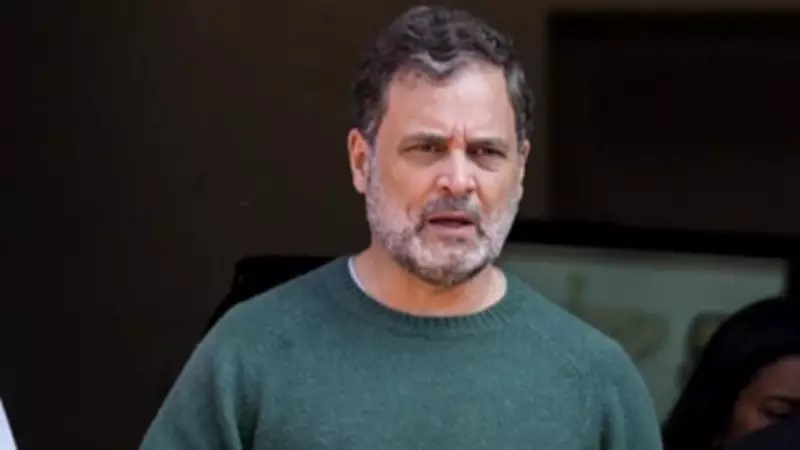
Rahul Gandhi Takes Firm Stand Against Modi Government on Farmers' Issues
Congress leader Rahul Gandhi has launched a scathing attack on the Narendra Modi-led government, accusing it of being "anti-farmer" and vowing to prevent any compromise on agricultural interests. In a strongly worded statement, Gandhi positioned himself as a defender of farmers against policies he claims threaten their livelihoods and national food security.
Allegations of Betrayal Against Modi Government
Recalling the Congress party's historical commitment to food security, Gandhi alleged that Prime Minister Narendra Modi has "betrayed" India's agricultural foundation. "The Congress has consistently fought for food security, but Modi has betrayed both our farmers and our nation's food security," Gandhi declared, framing the current administration as hostile to agricultural communities.
Unwavering Commitment to Farmers' Causes
Gandhi made his position unequivocally clear through a social media post on February 12, 2026, stating in Hindi: "Whether it's an FIR, a registered case, or privilege motions brought against me - I will fight for farmers." This declaration underscores his readiness to face legal and political challenges in his advocacy for agricultural workers.

He further elaborated: "Any trade deal that snatches farmers' livelihoods or weakens the country's food security is anti-farmer. We will not let the anti-farmer Modi government compromise on farmers' interests." This statement directly links trade policies to their potential impact on agricultural communities, suggesting Gandhi will oppose agreements he perceives as harmful.
Political Context and Timing
The remarks come amid ongoing debates about agricultural policies and trade agreements in India. Gandhi's positioning aligns with the Congress party's attempt to reclaim its traditional rural support base, which has faced challenges in recent elections. By framing the Modi government as "anti-farmer," Gandhi seeks to draw a sharp contrast between his party's approach and the current administration's policies.
This development represents a significant escalation in political rhetoric surrounding agricultural issues, with Gandhi personally committing to frontline advocacy regardless of potential legal or parliamentary consequences. The statement's timing and forceful language suggest this will become a central theme in opposition criticism of government policies moving forward.






