Supreme Court Confirms Voter List Scrutiny Deadline for West Bengal Assembly Elections
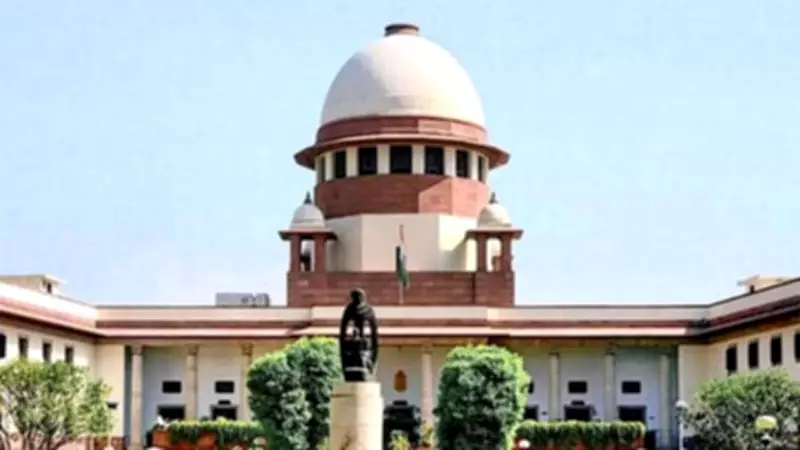
The Supreme Court of India has provided crucial reassurance regarding the electoral process in West Bengal, directly addressing concerns raised by the state government. On Wednesday, a bench comprising Chief Justice Surya Kant, Justice Joymalya Bagchi, and Justice Vipul M. Pancholi announced that the Calcutta High Court Chief Justice has confirmed the adjudication of all pending objections to deleted voters will be completed by April 7. This timeline is critical as it precedes the filing of nominations for the upcoming assembly elections later this month.
Massive Adjudication Effort Underway
The scale of the task is enormous, involving 60,06,675 objections to names deleted from voters' lists. To manage this, judicial officers from West Bengal, Odisha, and Jharkhand have been mobilized. The Supreme Court bench reported that by Wednesday morning, 47,30,000 objections had already been decided by these officers. Approximately 500 judicial officers from Bengal and an additional 200 from Odisha and Jharkhand are working diligently to clear the remaining objections before the April 7 deadline.
"Calcutta High Court Chief Justice has informed us that the pending objections are likely to be adjudicated by April 7. Keeping the aforesaid date in mind, post these matters on April 6 for further hearing," stated the bench, scheduling the next hearing accordingly.

Establishment of Appellate Tribunals for Fairness
In response to the West Bengal government's expressed doubts about the fairness of the Election Commission's process, the Supreme Court exercised its extraordinary powers under Article 142 to establish a robust appellate mechanism. The court has directed the constitution of election tribunals to hear appeals against the decisions of judicial officers acting as electoral registration officers.
The Election Commission has notified 19 such tribunals, which will be composed of former High Court Chief Justices and judges. These tribunals have been granted significant discretion to ensure thorough review processes.
"The appellate tribunals will have the discretion to revisit the full records, including the reasons assigned by judicial officers while adjudicating objections, before deciding appeals filed before them, and also to inform the parties of these reasons," clarified the bench.
Procedural Autonomy and Judicial Independence
The Supreme Court emphasized that these tribunals are free to evolve their own procedures in accordance with the principles of natural justice. They are requested to adjudicate appeals after providing all parties with a fair opportunity to be heard. Additionally, individuals intending to file appeals will be provided with the reasons given by judicial officers for rejecting their claims, ensuring transparency.
During the proceedings, Senior Advocate Kalyan Banerjee raised concerns about the Election Commission providing training to former Chief Justices and judges before the tribunals commence work on Thursday. He questioned the independence of quasi-judicial bodies receiving such training.
Chief Justice Surya Kant responded firmly, "They are former Chief Justices and judges of High Courts. Obviously, they will act independently. Training is for handling computer and soft copies of documents. Don't raise frivolous objections." Election Commission counsel D.S. Naidu clarified that it was merely an orientation, not training.
Addressing Political Interference Concerns
Justice Joymalya Bagchi further reinforced the independence of the process, stating, "They have vast experience in deciding matters. You must not be worried about EC influencing judges." When Senior Advocate Kapil Sibal sought assurance about approaching the Calcutta High Court Chief Justice with grievances, the bench affirmed this right but issued a stern warning against political delegations.

"Obviously, you have the right to approach the Calcutta High Court Chief Justice. But don't go in a group or in a delegation. If you send a political delegation, we will tell the Chief Justice not to entertain such delegations. Mr. Banerjee, or the advocate general, can go and meet. Where is the necessity of political workers to go and meet the Chief Justice?" emphasized the bench.
Justice Bagchi highlighted a broader concern: "The problem is to the best of our knowledge and information, representations by political unions or associations are not only made to the High Court Chief Justice but also to district judges. We do not want judicial officers to be disturbed in this manner."
This comprehensive judicial oversight aims to ensure that the electoral process in West Bengal proceeds with integrity, transparency, and minimal disruption, addressing both procedural and political concerns ahead of the crucial assembly elections.