

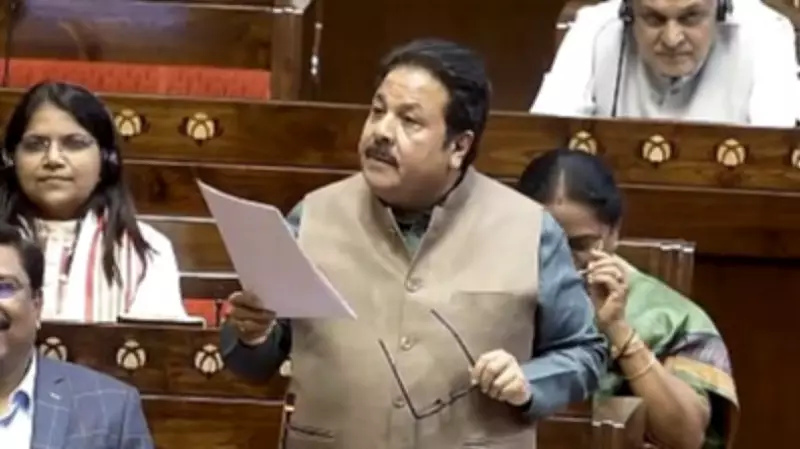
Congress Leader Rajeev Shukla Criticizes BJP Over Atal Bihari Vajpayee Credit in Trade Discussions
Senior Congress leader Rajeev Shukla has launched a sharp critique against the Bharatiya Janata Party (BJP), accusing them of deliberately avoiding praise for former Prime Minister Atal Bihari Vajpayee in the context of recent India-US trade developments. Shukla's comments came during a discussion comparing US tariff rates under different political administrations, highlighting what he perceives as a partisan bias in acknowledging historical contributions.
Shukla's Accusation: BJP 'Scared' to Mention Vajpayee
In a pointed statement, Rajeev Shukla asserted, "We praise Narsimha Rao ji but they're scared to speak about Atal ji." This remark underscores a broader political narrative where Shukla contrasts the Congress party's willingness to credit former Prime Minister P.V. Narasimha Rao with the BJP's alleged reluctance to highlight Vajpayee's legacy. Shukla emphasized that no BJP speaker has been giving due credit to Vajpayee, raising questions about the party's internal dynamics and historical acknowledgment.
Comparative Analysis of US Tariff Rates Across Eras
Shukla's criticism extended to a comparative analysis of US tariff rates during the tenure of former Prime Minister Manmohan Singh and the current administration under Narendra Modi. By drawing this comparison, he aimed to contextualize the trade discussions within a broader historical framework, suggesting that trade policies and outcomes should be evaluated across multiple political periods rather than in isolation. This approach highlights the ongoing debate over economic strategies and their attribution to specific leaders or parties.

Political Implications and Reactions
The accusation has sparked discussions in political circles, with implications for how parties frame their historical narratives and credit past leaders. Shukla's comments, made via social media and public statements, reflect a strategic move to challenge the BJP's portrayal of trade achievements and to reinforce the Congress party's stance on inclusive recognition of contributions. The issue taps into deeper themes of political legacy and partisan credit-taking in India's evolving economic landscape.
Background on the India-US Trade Deal Context
While Shukla's remarks did not delve into specific details of the India-US trade deal, they occur against the backdrop of ongoing negotiations and discussions between the two nations. Trade relations have been a focal point in recent years, with tariffs and market access being key areas of interest. Shukla's intervention adds a political dimension to these economic talks, emphasizing how domestic politics can influence the perception and discourse around international agreements.
As the debate unfolds, observers note that such exchanges are common in Indian politics, where historical figures like Atal Bihari Vajpayee hold significant symbolic value. The outcome may affect public opinion and party strategies as both sides navigate the complexities of trade policy and political legacy.






