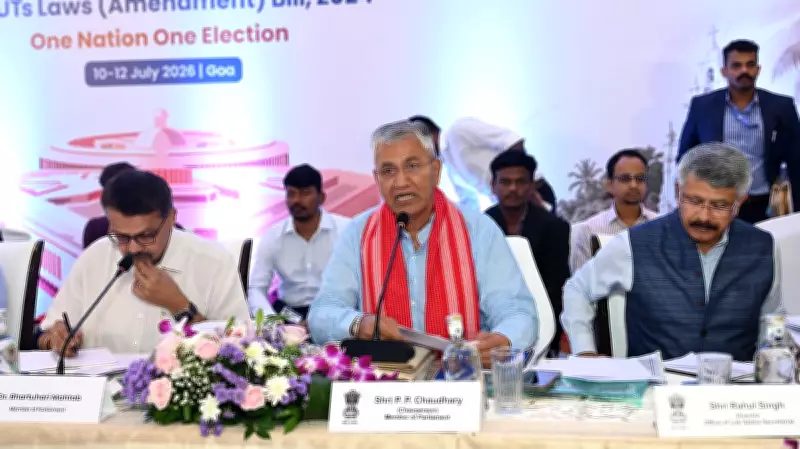
Six former Chief Justices of India (CJIs) have told the Joint Parliamentary Committee (JPC) that holding simultaneous elections for the Lok Sabha and state assemblies would not undermine federalism or the Constitution, according to JPC chairman P P Chaudhary.
Key Testimonies Before the JPC
Chaudhary, a former Union minister and senior BJP leader, said on July 11, 2026, that three sitting Supreme Court judges, the chairman of the Law Commission of India, and several other constitutional experts also expressed similar views before the committee. The JPC is examining the feasibility of the 'One Nation, One Election' proposal.
“Six former chief justices of India, three judges of the Supreme Court, the chairman of the Law Commission, and many constitutional experts have said that simultaneous elections will not undermine federalism and the Constitution,” Chaudhary told reporters.

Broad Consensus Among Experts
The JPC chief emphasized that the testimonies indicate a broad consensus among legal luminaries. He noted that the proposal aims to synchronize the election cycles of the Lok Sabha and all state legislative assemblies to reduce the frequency of elections and associated costs.
“The committee has received overwhelming support from constitutional experts who believe that simultaneous elections are constitutionally sound and will strengthen the democratic process,” Chaudhary added.
He also clarified that the JPC is analyzing all aspects, including logistical challenges, legal amendments required, and the impact on the federal structure.
Opposition Concerns
Several opposition parties have opposed the move, arguing that it could undermine the autonomy of states and concentrate power in the Centre. However, Chaudhary said the testimonies of former CJIs and other experts have effectively addressed these concerns.
The JPC is expected to submit its report to Parliament in the upcoming monsoon session. The government has maintained that simultaneous elections will ensure political stability, reduce election expenditure, and allow governments to focus on governance rather than constant campaigning.