

Akhilesh Yadav's Vision India Roadshow: Expanding SP's Horizon Beyond Traditional Base
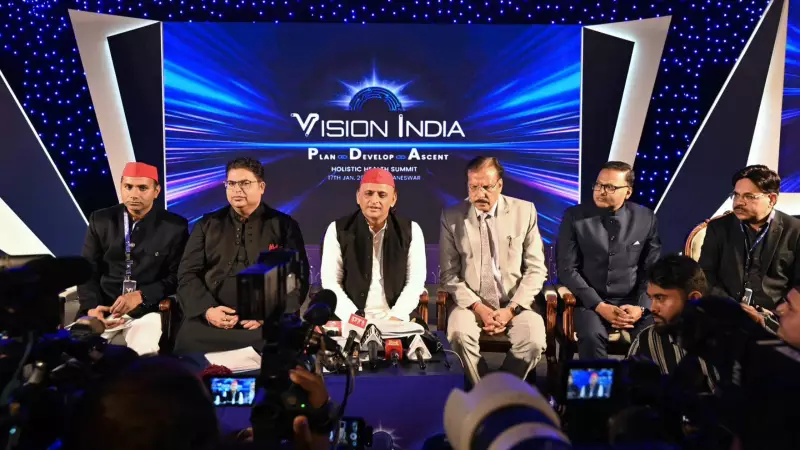
In a strategic move to transform its political identity, Samajwadi Party president Akhilesh Yadav has launched the Vision India roadshow, a series of summits focusing on contemporary issues like artificial intelligence, startups, and holistic health. This initiative marks a significant departure from the party's traditional image as primarily representing Yadav and Muslim communities.
Multicity Summits Addressing Modern Challenges
The Vision India program has already made its presence felt in several cities across India. In November, Yadav addressed a summit in Bengaluru centered on startup ecosystems, followed by a December event in Hyderabad focusing on artificial intelligence and technological innovation. Most recently, in January, he engaged with intellectuals, media representatives, and youth at a holistic health summit in Bhubaneswar—a region where the SP has minimal political footprint.
According to party sources, more such summits are scheduled in the coming months, with plans to expand to Ladakh, Jaipur, Mumbai, and major Uttar Pradesh cities. Despite being organized by the Samajwadi Party, these events are officially described as non-political gatherings aimed at fostering dialogue on national development.

Strategic Rebranding Through Policy Engagement
Rajeev Rai, SP's Ghosi Lok Sabha MP and chief coordinator of Vision India, emphasized that these summits serve a dual purpose. First, they provide a platform for Yadav to interact with domain experts and young minds, gathering insights on critical issues. Second, the ideas generated from these discussions will be incorporated into the party's future election manifestos, creating a policy-driven approach to governance.
"Vision India will pave the way for a positive, pragmatic and progressive future," Rai stated. He added that the initiative aims to counter what he called a wrong perception created by political rivals about the SP's limited appeal. "Opponents claim we are confined to rural UP and rely solely on Muslim and Yadav votes. The reality is that we have a national presence and a vision for inclusive growth," explained another party leader.
Complementary Moves: Temple Politics and Organizational Changes
The Vision India summits are part of a broader strategy to reshape the party's image. In a notable development, Yadav recently appointed mahant Shubham Giri as the working president of SP's Uttarakhand unit. Giri, who resides in a Haridwar ashram, has previously served as state secretary and is reportedly considering contesting the 2027 Uttarakhand Assembly elections.
This appointment aligns with Yadav's criticism of the BJP government in Uttar Pradesh for "humiliating seers," highlighting the SP's outreach to religious leaders. Additionally, the party has made symbolic gestures in temple politics, such as Dimple Yadav's consecration of the Kedareshwar Mahadev Temple in Etawah in January 2024—timed with Prime Minister Narendra Modi's Ayodhya ceremony.
Historical Context: Evolving Party Identity
This isn't Yadav's first attempt at modernizing the SP's image. Ahead of the 2012 Assembly polls, he publicly distanced himself from his father Mulayam Singh Yadav's anti-English and anti-computer stance from the 2009 Lok Sabha campaign. The party subsequently emphasized its digital presence through social media campaigns and youth-focused advertisements, which many credit for contributing to their outright majority win in 2012.
The current Vision India initiative represents a continuation of this evolution, positioning the Samajwadi Party as a forward-thinking entity engaged with technology, innovation, and holistic development. By addressing topics like AI and startups, Yadav aims to attract urban and youth voters while broadening the party's appeal beyond its traditional base.
As the SP plans more summits across India, the political landscape watches closely to see if this rebranding effort will translate into electoral success in upcoming state and national elections.






