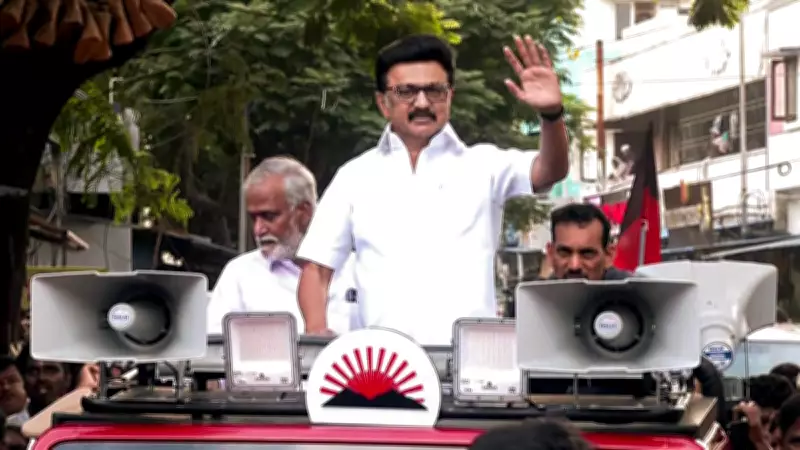
Tamil Nadu Chief Minister MK Stalin has made a significant political statement, indicating that the DMK will permit actor-turned-politician Vijay to form the state government following the 2026 assembly elections. Stalin assured that his party would not create any disruptions for at least six months after Vijay assumes office.
Stalin's Assurance on Political Stability
Speaking at a party meeting in Chennai, Stalin emphasized the DMK's commitment to democratic principles and political stability. He stated that if Vijay's party wins the majority, the DMK would respect the mandate and allow him to govern without interference. "We will not disturb his administration for six months," Stalin declared, adding that this gesture reflects the party's maturity and respect for the people's choice.
Background of Vijay's Political Entry
Vijay, a popular film star, announced his political party earlier this year, aiming to contest in the 2026 Tamil Nadu assembly elections. His entry has reshaped the political landscape, with many analysts predicting a tough fight among the DMK, AIADMK, and Vijay's party. Stalin's statement is seen as a strategic move to project the DMK as a fair and cooperative opposition.

Reactions from Political Circles
The announcement has drawn mixed reactions. While DMK supporters praised Stalin's statesmanship, critics questioned the timing and intent behind the promise. AIADMK leaders dismissed it as a publicity stunt, while Vijay's party welcomed the assurance but remained cautious. Political experts believe this could reduce pre-election tensions and foster a healthier democratic environment.
Impact on 2026 Elections
Stalin's declaration may influence voter perception, positioning the DMK as a party that values democratic norms. It also puts pressure on Vijay's party to perform and deliver on its promises. The six-month grace period could allow Vijay to stabilize his government and implement key policies without immediate political hurdles.
As the 2026 elections approach, Tamil Nadu's political dynamics continue to evolve. Stalin's statement adds a new dimension to the electoral discourse, focusing on post-election cooperation and governance stability.