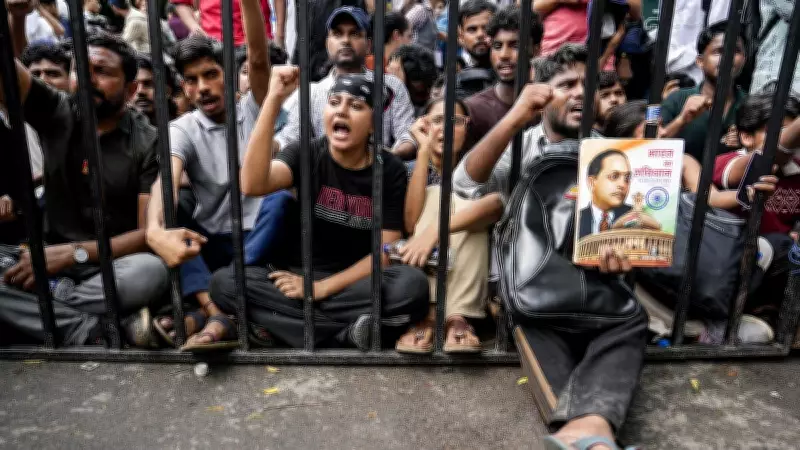
The recent student-led agitation has emerged as a powerful demonstration of grassroots accountability, offering a stark lesson to the political opposition at a time when its parliamentary strength was at a historic low. The movement's success underscores how organized youth can effect change even when institutional counterweights are compromised.
Victory Amidst Weak Opposition
The student and youth protestors managed to extract significant concessions from the government during a period when the parliamentary opposition was at its weakest. Over the span of 90 days, 37 Members of Parliament from opposition parties crossed over to the ruling Bharatiya Janata Party, severely diminishing the opposition's ability to challenge legislative agendas. This exodus left the Congress and other parties scrambling to maintain relevance, while the Modi government appeared unstoppable in pushing through contentious bills.
Lessons in Accountability
The movement's success is attributed to its non-hierarchical structure, clear demands, and sustained public pressure. Unlike traditional political parties that rely on backroom deals, students leveraged social media, campus networks, and public protests to maintain momentum. They held their own leaders accountable through transparent decision-making processes, a contrast to the opaque operations of mainstream political outfits. According to political analysts, this approach forced the government to negotiate, as the movement could not be easily co-opted or silenced.

Impact on Policy and Public Discourse
The agitation directly influenced policy discussions, with the government agreeing to review several controversial measures. The students' ability to frame issues in moral terms—such as justice, fairness, and future opportunity—resonated with a wider public, including non-student citizens. This broadened the movement's base and made it difficult for the government to dismiss it as fringe.
Conclusion
The student movement serves as a case study in effective accountability mechanisms. While the opposition parties remained fragmented and distracted by internal crises, the youth demonstrated that organized civil society can still check executive overreach. The lessons for the opposition are clear: to remain relevant, they must adopt similar transparency and grassroots engagement, or risk being permanently sidelined.