Uniform Civil Code Emerges as Central Flashpoint in West Bengal Assembly Elections
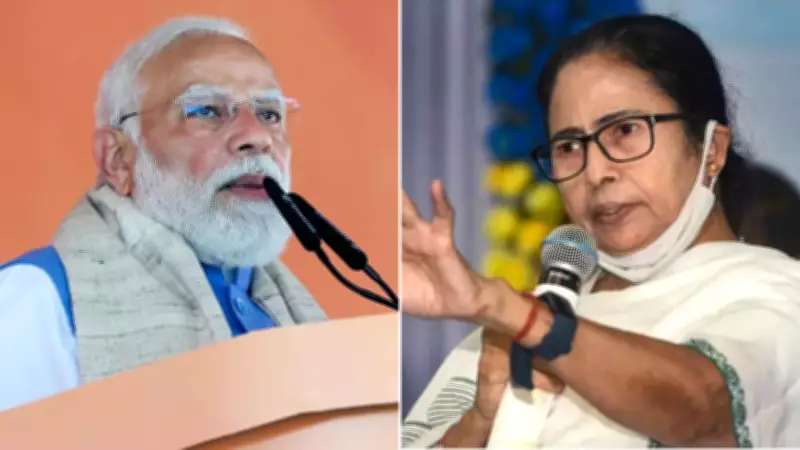
The contentious Uniform Civil Code (UCC) has become a defining battleground in the ongoing West Bengal Assembly elections, creating a stark political divide between Prime Minister Narendra Modi and Chief Minister Mamata Banerjee. The issue has escalated into a major campaign focal point with both leaders taking diametrically opposite positions that could significantly influence voter sentiment across the state.
PM Modi's Firm Commitment to UCC Implementation
Addressing a substantial rally in Jangipur within Murshidabad district, Prime Minister Narendra Modi made an unequivocal declaration regarding the BJP's commitment to implementing the Uniform Civil Code. The Prime Minister emphasized that the BJP's recently released manifesto, known as the 'Sankalp Patra,' provides a clear roadmap for introducing the UCC within six months of forming the government.
"The nation's security remains of paramount importance to us," stated PM Modi during his address. "The BJP resolves to implement UCC in West Bengal to end the politics of appeasement forever."

The Prime Minister strategically positioned the UCC proposal as integral to both governance reforms and national security considerations. He framed the implementation as part of a broader initiative to eliminate what he characterized as "appeasement politics" that has allegedly persisted in West Bengal. This positioning aligns with the BJP's comprehensive electoral narrative in the state, which includes allegations of corruption, deteriorating law and order, and concerning demographic shifts under the Trinamool Congress administration.
Mamata Banerjee's Vehement Opposition and Repeal Pledge
In direct response to the BJP's manifesto commitments, Chief Minister Mamata Banerjee mounted a vigorous counterattack during her gathering in Keshiary, located in Paschim Medinipur district. The TMC leader not only opposed the implementation of the Uniform Civil Code but made a firm pledge to repeal the legislation should her party gain a majority at the Centre.
"They have explicitly mentioned UCC in their manifesto, and I will vehemently oppose this," declared Banerjee. "While they currently hold the majority and may pass the Bill, when they lose that majority tomorrow, we will revoke the legislation entirely."
The Chief Minister raised substantial concerns regarding both electoral processes and the timing of policy decisions. She criticized what she described as the BJP's tendency to push significant legislative measures without adequate parliamentary debate, particularly during active election cycles. Banerjee specifically referenced the Delimitation Bill, alleging it was introduced without proper discussion as part of a broader strategy to divide Bengal and implement the National Register of Citizens (NRC) in the state.
Allegations of Electoral Manipulation and Political Targeting
Expanding her critique beyond the UCC controversy, Mamata Banerjee launched serious allegations regarding electoral integrity. She criticized the Special Intensive Revision (SIR) of electoral rolls, characterizing it as "a massive scam rather than a legitimate process." The Chief Minister accused authorities of manipulating voter lists and deleting approximately 90 lakh names to benefit the BJP politically.
Banerjee further alleged direct political targeting against her personally, revealing that "two false affidavits were submitted in attempts to cancel my candidature from Bhabanipur." She expressed concern that if such tactics could be employed against a sitting chief minister, ordinary citizens faced even greater vulnerability to electoral manipulation.
BJP's Broader Campaign Narrative and Counter-Allegations
The BJP has intensified its campaign narrative in West Bengal, with Prime Minister Modi accusing the Trinamool Congress of multiple governance failures. The Prime Minister alleged that the TMC administration has relied on "infiltrators," fostered systemic corruption, and failed to maintain basic law and order. He contrasted violent incidents during Ram Navami processions in West Bengal with peaceful celebrations elsewhere in the country, suggesting deteriorating communal harmony under the current state government.

The political confrontation over the Uniform Civil Code represents more than just a policy disagreement—it symbolizes fundamentally different visions for West Bengal's future. As the state approaches its scheduled election dates of April 23 and 29, with counting set for May 4, the UCC debate has crystallized into a referendum on competing ideologies, governance approaches, and constitutional interpretations that will likely resonate far beyond the immediate electoral cycle.