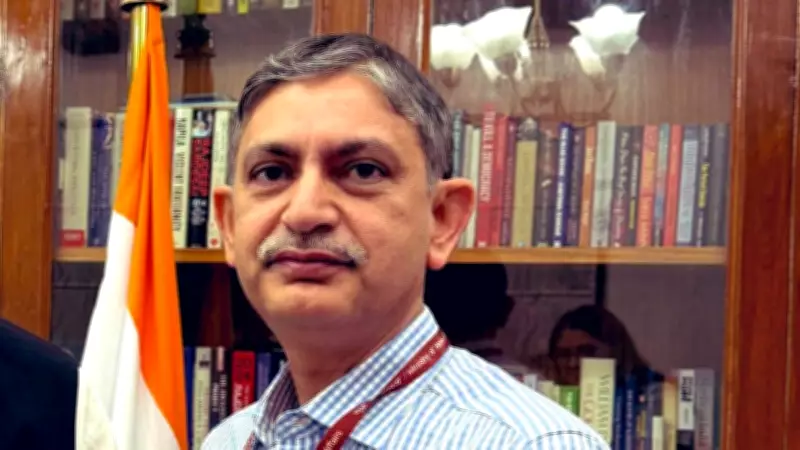
In a recent statement, Union Public Service Commission (UPSC) Secretary Shashi Ranjan Kumar offered a nuanced perspective on the decline of Hindu civilisation, attributing it to a combination of political subjugation and internal shortcomings. Speaking at an event, Kumar emphasised that India's history is not merely a chronicle of political transitions, but a continuous journey of exploration in knowledge, science, and philosophy.
Historical Perspective on Decline
Kumar highlighted that the decline of Hindu civilisation was not a sudden event but a gradual process influenced by multiple factors. He pointed out that political subjugation by foreign invaders played a significant role, but internal weaknesses within the society also contributed to the eventual decline. These internal shortcomings included social rigidities, lack of unity among different kingdoms, and failure to adapt to changing circumstances.
India's Enduring Legacy
Despite the decline, Kumar stressed that India's civilisational legacy has endured through the ages. He noted that the country's history is a continuous journey of exploration in knowledge, science, and philosophy. The UPSC Secretary urged a deeper understanding of this heritage, moving beyond simplistic narratives of political victories and defeats.

Relevance for Modern India
Kumar's remarks come at a time when there is renewed interest in India's ancient past and its relevance for contemporary society. He called for a balanced view that acknowledges both the achievements and shortcomings of historical periods. By learning from the past, India can build a more inclusive and progressive future.
The statement has sparked discussions among historians and scholars, with many appreciating the nuanced approach to understanding civilisational decline. Kumar's comments underscore the importance of critical historical analysis in shaping national identity and policy.