

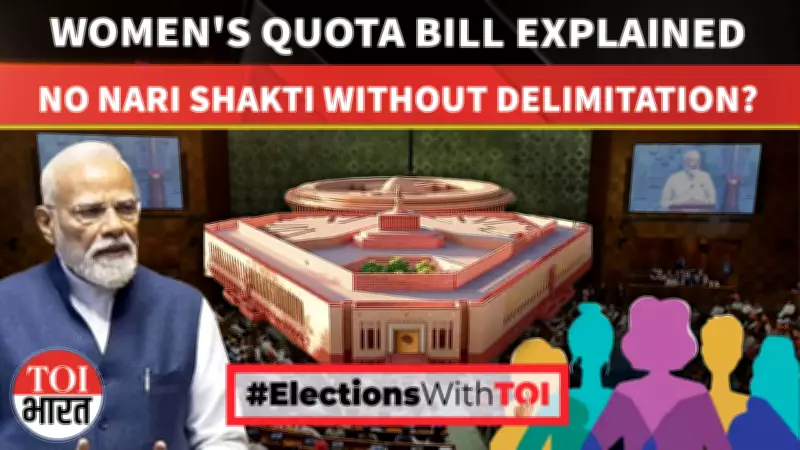
Women's Reservation Bill Returns to Parliament Spotlight
On the opening day of a special session of Parliament, the Women's Reservation Bill has once again taken center stage in Indian politics. This landmark legislation, which was originally passed in 2023, guarantees a substantial 33% reservation for women in both the Lok Sabha and state legislative assemblies across India.
The Core Promise and Current Reality
The proposed law represents a transformative shift in political representation, potentially increasing women's participation in legislatures from the current approximate 15% to nearly one-third of all seats. This would mark one of the most significant structural changes to India's electoral landscape in decades, fundamentally altering the composition of decision-making bodies at both national and state levels.
The Implementation Roadblock
Despite the bill's passage three years ago, a critical obstacle has prevented its actual implementation. The original legislation tied the activation of women's reservation to two specific conditions: the completion of delimitation exercises and the next national Census. This linkage has effectively created an indefinite delay, keeping the quota system in legislative limbo while these extensive administrative processes unfold.

Political Support and Opposition Concerns
While broad political consensus exists around the principle of women's reservation, the timing and implementation details have sparked significant debate. Opposition parties have raised concerns about the bill's reintroduction during ongoing state elections, suggesting political motivations behind the timing. Beyond immediate electoral considerations, deeper structural issues have emerged as points of contention.
The opposition has specifically flagged concerns regarding the parallel Delimitation Bill, which has become intertwined with the women's reservation debate. Southern states in particular have expressed apprehension about potential loss of representation in any delimitation exercise, while demands continue to grow for including Other Backward Classes (OBC) quotas within the women's reservation framework.
Growing Political Complexities
What began as a straightforward representation issue has evolved into a multifaceted political and structural question. Protests from regional parties like the DMK have intensified debates around federal balance and state rights. The discussion has expanded beyond gender representation to encompass broader questions about:
- Regional representation in national politics
- The balance between population-based representation and historical development
- Intersectional considerations within reservation policies
- The timing of major electoral reforms
The Path Forward to 2029
If successfully amended to remove the delimitation and Census conditions, the Women's Reservation Bill could create immediate electoral consequences. Political parties would need to substantially reconfigure their candidate selection processes, potentially fielding women candidates in one-third of all constituencies. This would require significant organizational restructuring and could alter traditional political dynamics in numerous constituencies across India.
The coming parliamentary discussions will determine whether India achieves this historic shift in political representation before the 2029 general elections. The outcome will not only affect women's political participation but could reshape India's democratic landscape for generations to come, creating new patterns of representation and potentially altering the very nature of political discourse in the world's largest democracy.






