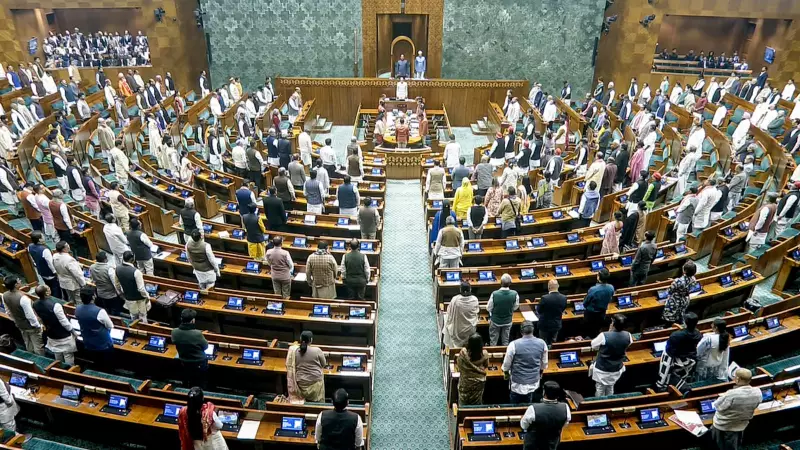
The first day of Parliament's Winter Session on Monday was marked by legislative action and persistent protests, as the Lok Sabha managed to pass the Manipur Goods and Services Tax (Second Amendment) Bill, 2025 despite repeated disruptions and adjournments. The opposition's demand for a discussion on the nationwide Special Intensive Revision (SIR) of electoral rolls created a din in the House, but the government secured the bill's passage through a voice vote.
Manipur GST Bill Replaces October Ordinance
The passed legislation seeks to provide statutory backing to an Ordinance promulgated on October 7. This move is crucial for implementing the GST 2.0 reforms in Manipur, which is currently under President's rule. Finance Minister Nirmala Sitharaman clarified that the bill was necessary to align the state's laws with the decisions taken at the 56th meeting of the GST Council.
Sitharaman detailed that the Council had approved a major rationalization, merging multiple GST slabs into two primary rates. The 5, 12, 18, and 28 percent slabs have been consolidated into two slabs of 5 and 18 percent, with a new 40 percent rate proposed for ultra-luxury items. These revised rates have been in effect since September 22.

The Finance Minister explained that while the Central GST law was amended via the Finance Act, 2025 (Sections 121 to 134), corresponding changes were urgently required in Manipur's law to prevent any legal repugnancy with the central statute.
Opposition's Disapproval Motion Fails Amid Protests
The proceedings were not without contention. RSP member NK Premachandran moved a statutory resolution seeking disapproval of the Manipur GST Ordinance. However, when called upon to speak by TDP member Krishna Prasad Tenneti, who was presiding, Premachandran pointed out that the House was not in order due to the ongoing protests.
As opposition members continued their demonstration in the well of the House, the Chair called upon BJP member Shashank Mani, who spoke in support of the bill. Subsequently, the resolution to disapprove the Ordinance was rejected by a voice vote, paving the way for the bill's passage in the same manner. Following this, the House was adjourned for the day.
New Bills on Tobacco and 'Sin Goods' Introduced
In another significant development, Finance Minister Nirmala Sitharaman introduced two new bills aimed at repurposing levies on so-called 'sin goods'. This move comes ahead of the scheduled phase-out of the GST compensation cess on these products.
The Central Excise (Amendment) Bill seeks to levy an excise duty on tobacco and related products. Simultaneously, 'The Health Security se National Security Cess Bill, 2025' would apply to the manufacturing of pan masala and other goods that the government may notify in the future.
These bills were also introduced amid the din caused by opposition protests. TMC member Saugata Ray opposed their introduction. Regarding the tobacco bill, Ray argued that while tobacco is harmful, the bill's text did not mention this fact. For the Health Security Cess Bill, he opposed it on the grounds that cess proceeds are not shared with state governments. The government may take up these bills for discussion in the Lok Sabha on Tuesday.
The day's events underscored the tense atmosphere in Parliament, with the government pushing through its legislative agenda on taxation and finance while the opposition remained steadfast in its demand for a discussion on the revision of electoral rolls being carried out in 12 states and Union Territories.