

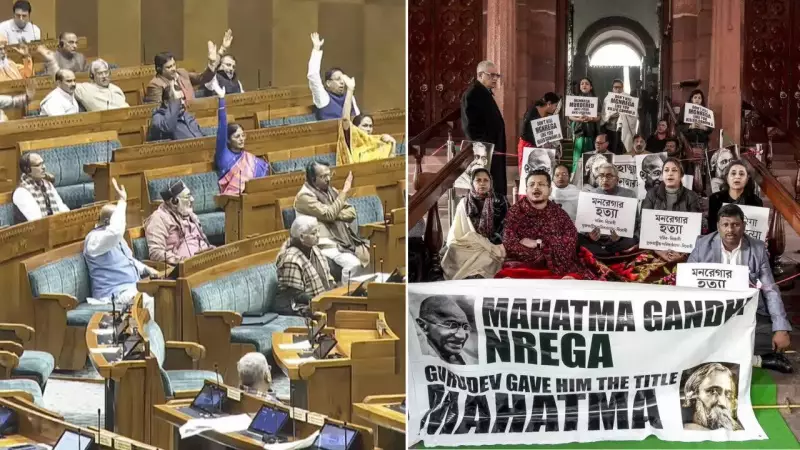
The Winter Session of Parliament, which commenced on December 1, finally drew to a close on Friday after 19 days of intense and often chaotic proceedings. The sixth session of the eighteenth Lok Sabha was characterized by frequent disruptions, loud protests, and sharp political clashes between the ruling government and the Opposition.
Legislative Output Amidst Political Turmoil
Despite the turbulent atmosphere, the session witnessed the passage of several significant pieces of legislation. According to official data, a total of ten government Bills were introduced, out of which eight were successfully passed by the Houses.
The Lok Sabha functioned for a total of 92 hours and 25 minutes over 15 sittings, achieving a productivity rate of 111 percent, as stated by Speaker Om Birla. The House admitted 300 starred questions, with 72 answered orally, and received 3,449 unstarred questions. Members were active in raising issues, with 408 matters brought up during Zero Hour and 372 issues taken up under Rule 377.

Key Bills That Were Passed
The legislative agenda was packed with reforms across sectors. Here are some of the most notable Bills that cleared Parliament:
The Sabka Bima Sabki Raksha (Amendment of Insurance Laws) Bill, 2025: This landmark legislation, passed on December 17, raises the foreign direct investment (FDI) limit in the insurance sector to 100 percent. Finance Minister Nirmala Sitharaman, who moved the Bill, stated it aims to expand insurance access and achieve universal protection by 2047. It mandates that at least one of the top executives in an insurance company must be an Indian citizen.
The Sustainable Harnessing of Nuclear Energy (SHANTI) Bill, 2025: Passed by the Lok Sabha on December 17 amid an Opposition walkout, this Bill marks a major policy shift by opening nuclear energy to private sector participation. Minister of State Jitendra Singh said it establishes a pragmatic civil liability regime and aims to help India reach its target of 100 GW of nuclear power capacity by 2047.
The Viksit Bharat Gram Rozgar aur Manav Garima (VB-G RAM G) Bill, 2025: Perhaps the most contentious legislation, this Bill replaces the two-decade-old Mahatma Gandhi National Rural Employment Guarantee Act (MGNREGA). It guarantees 125 days of wage employment per year to rural households and was passed on December 18 amidst sustained protests from the Opposition, who alleged a lack of consultation.
Other important Bills passed include the Appropriation (No. 4) Bill, 2025, which authorizes additional government spending; the Repealing and Amending Bill, 2025, which scraps 71 obsolete laws; and amendments to the Manipur GST Act and the Central Excise Act.
Debates Held and Debates Missed
The session featured an extensive 11-hour, 32-minute discussion on December 8 to mark the 150th anniversary of the national song Vande Mataram, with 65 members participating. Another major discussion on electoral reforms spanned nearly 13 hours over two days.
However, a critical proposed debate on the severe air pollution crisis engulfing North India, including Delhi, could not be taken up. The Lok Sabha was adjourned sine die before the issue was addressed, leaving it unresolved. Leader of Opposition Rahul Gandhi had repeatedly demanded a discussion on the government's plan to tackle the health hazard.
Parliamentary Affairs Minister Kiren Rijiju expressed regret over the missed debate, accusing the Opposition of stalling proceedings. The Opposition, however, rejected this claim, stating the government adjourned the House without scheduling the discussion.
Government and Opposition Lock Horns
In the customary post-session press conference, Minister Rijiju described the session as "very productive," asserting that the passed Bills would improve lives and contribute to making India a developed nation. He claimed the debate on electoral reforms had "exposed" those who had accused the Election Commission of India.

The Opposition presented a starkly different view. Congress leader Jairam Ramesh termed it a "pollution session" and criticized the government's stance on the link between pollution and health. Trinamool Congress MPs staged an overnight dharna, protesting the passage of the VB-G RAM G Bill without adequate discussion, calling it an attack on rural workers.
As both Houses adjourned sine die, the Winter Session of 2025 ended with legislative milestones achieved but deep political divisions and unresolved public concerns left lingering, setting the stage for future confrontations.





