The Winter Session of Parliament commenced on a sharply confrontational note, with Prime Minister Narendra Modi and the Opposition led by the Congress trading sharp accusations of indulging in political theatrics. The Prime Minister's remarks outside Parliament, urging the House to be a place for "delivery, not drama," triggered a fierce counterattack, with the Congress labeling him the "biggest dramabaaz."
PM Modi Sets the Tone: A Call for Delivery Over Drama
Speaking to reporters ahead of the session's start, Prime Minister Narendra Modi emphasized the need for constructive debate. He asserted that Parliament must not become a "warm-up arena" for elections or an outlet to vent frustration after electoral defeats. Instead, he framed it as a platform for responsible governance and tangible outcomes.
"We need to work with a sense of responsibility. Parliament is not a place for drama, it is a place for delivery," the Prime Minister stated. He indirectly criticized the Opposition for frequently stalling proceedings and offered to "give the opposition tips to bring positivity in politics." His comments were seen as a reference to the previous Monsoon Session, which was virtually washed out due to protests over the Special Intensive Revision (SIR) of electoral rolls in Bihar.

Congress Strikes Back: Accusations of Hypocrisy and Distraction
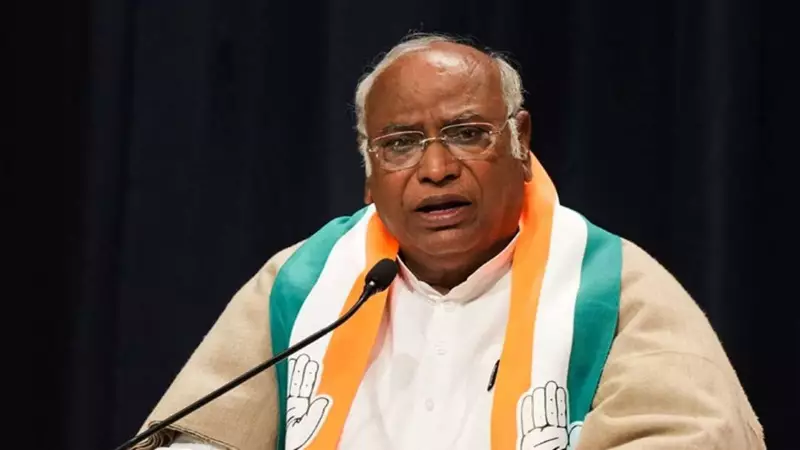
The Opposition's response was swift and scathing. Congress President Mallikarjun Kharge, in a statement on social media platform X, turned the Prime Minister's words against him. Kharge accused Modi of making a "dramebazi delivery" himself while ignoring the public's real issues.
"The reality is that the government has been continuously trampling on parliamentary decorum and system for the past 11 years," Kharge claimed. He listed unemployment, inflation, and economic inequality as pressing concerns being sidelined. The Congress leader also pointed to the passing of at least 12 bills in the Monsoon Session "in haste," some in less than 15 minutes and without discussion.
Congress General Secretary Jairam Ramesh escalated the rhetoric, directly calling the Prime Minister the "biggest dramabaaz." Ramesh accused Modi of hypocrisy, noting that the PM "never attends Parliament, undermines it and doesn’t engage with the opposition," yet delivers grand statements before each session. He argued that any dysfunction in Parliament is due to the government's refusal to allow debates on issues of public importance.
Broader Opposition Echoes Concerns on SIR and Accountability
The controversy quickly drew in other Opposition voices. Trinamool Congress (TMC) MP Abhishek Banerjee defended the demand for a debate on the SIR exercise, rejecting the characterization of it as "drama." He claimed the process had led to "around 40 deaths, including Booth Level Officers (BLOs)," due to being "unplanned and glitch-ridden."
"What the opposition is asking for is a debate on SIR. Is that drama? If raising people’s voice is drama, then the people will give them a reply in the next election," Banerjee asserted. He broadened the attack, questioning the government's accountability on issues from demonetisation to national security.
Congress leaders Priyanka Gandhi Vadra and Renuka Chowdhury also joined the fray. Vadra, the MP from Wayanad, stated that raising issues like SIR and Delhi's air pollution was the essence of Parliament, not drama. Chowdhury took a more personal dig, calling Modi a "master in drama" and comparing ruling party leaders to Mahatma Gandhi's three monkeys "who shut their eyes, ears and mouth."
A Session Shadowed by Confrontation
The explosive exchange on December 1, 2025, has set a contentious tone for the entire Winter Session. The core dispute revolves around two conflicting narratives: the government's appeal for smooth legislative work versus the Opposition's demand for discussion on specific grievances, primarily the SIR exercise and its fallout. With the Opposition vowing to "continuously raise" these issues and the government insisting on moving past "political theatrics," the stage is set for a session marked more by heated exchanges than by the "result-driven debate" the Prime Minister advocated.