For someone who has lived in Bengaluru all their life, the city's rains never meant what they do today. There was a time when an evening shower was romanticised — long walks under cloudy skies, piping hot chaat by the roadside, the unmistakable smell of masala puri and roasted corn filling the air. Rain was part of Bengaluru's charm.
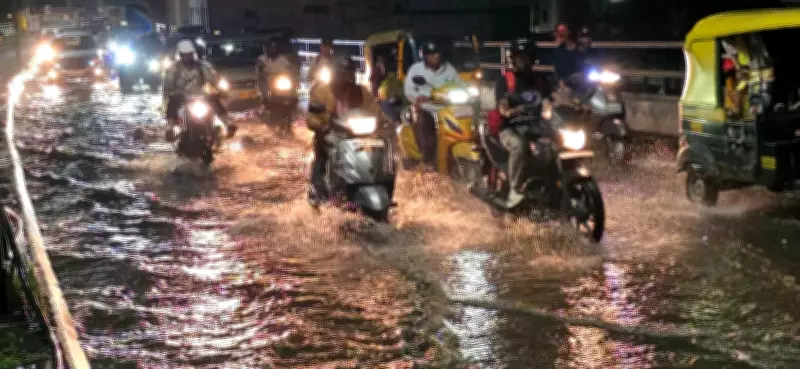
Today, rain in Bengaluru has become synonymous with flooded roads, waterlogging, electrocutions, fallen trees, endless traffic snarls, and civic anxiety. A spell of rain now often means spending hours stranded on a two-wheeler or stuck in overcrowded public transport, drenched, exhausted, and hoping to avoid falling sick. Even those travelling by car are no longer insulated from the chaos as rising water levels routinely swallow roads and parking lots alike.
Infrastructure Under Strain
The recent spell of rain once again left several parts of the city submerged, forcing Bengalureans to question the state of the city's infrastructure and preparedness. Those who have closely observed the functioning of the Greater Bengaluru Authority (GBA, formerly BBMP) know the scale at which the civic body attempts to keep the city moving during a crisis. Yet, the larger question remains: is it enough?

Last month alone, heavy rains claimed 11 lives in Bengaluru — deaths linked to poor infrastructure, negligence, and urban mismanagement. So, who takes the blame? The civic body struggling to manage an ever-expanding city? Governments that fail to allocate adequate funds for long-term urban planning? Or, at times, the citizens themselves?
Citizen Responsibility and Urban Decay
As Bengaluru's population continues to swell, the city's relationship with urban responsibility appears increasingly fractured. Garbage dumped onto streets eventually clogs drains, only for citizens to blame authorities when roads flood after a mild downpour. Households with multiple vehicles add to the city's crippling traffic, while disappearing lakes, shrinking footpaths, and unchecked construction continue to weaken Bengaluru's natural drainage systems.
We build over lakes, narrow pavements to widen roads, and push the city beyond its ecological limits — then express shock when rainwater enters homes, clogs roads, or trees collapse onto metro lines. Bengaluru's rain problem is no longer just about the weather. It is a reflection of what the city has become, and perhaps, what we have allowed it to become.
The cycle of blame and inaction must be broken. While civic authorities need to invest in resilient infrastructure, citizens must also adopt responsible practices like proper waste disposal and reducing vehicle dependency. Only through collective effort can Bengaluru reclaim its charm and weather the storms ahead.