

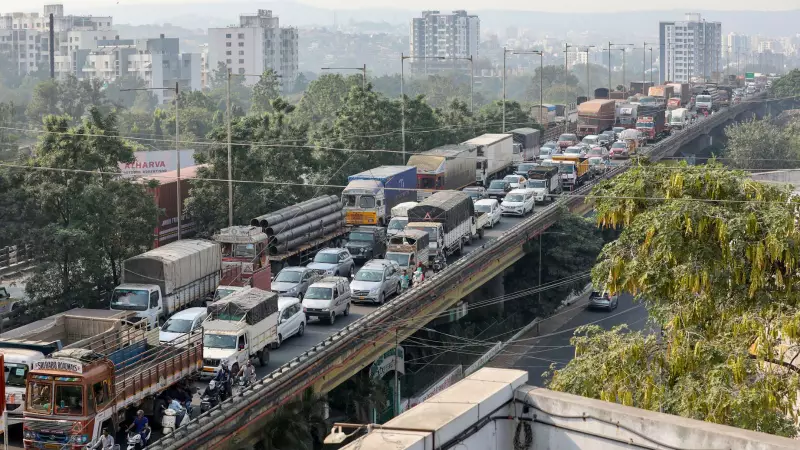
For over two decades, Bengaluru's traffic gridlock has transformed from a growing pain into a defining, infuriating characteristic of India's premier technology hub. The latest to join the chorus of complaints is none other than astronaut Shubhanshu Shukla, the first Indian on the International Space Station. Addressing the Bengaluru Tech Summit 2025 after a grueling commute, he quipped that reaching space might be faster than traversing the city from Marathahalli to Tumkur Road.
The Anatomy of a Gridlock: From Garden City to Global Chokepoint
Bengaluru's journey from a serene "pensioners' paradise" to a traffic nightmare is a tale of explosive, unplanned growth. The tech boom of the early 2000s triggered a massive influx of people and vehicles for which the city's infrastructure was utterly unprepared. According to the Karnataka government's 2020 Comprehensive Mobility Plan, the city's population grew by 38% between 1991 and 2001, making it India's fastest-growing metropolis after Delhi.
This was compounded by a heavy reliance on personal vehicles. Transport Department data reveals a staggering statistic: while the city's population increased by nearly 50% from 84 lakh in 2011 to 1.23 crore in August 2025, the number of registered private vehicles skyrocketed by over 200%—from 40 lakh to 1.21 crore. Today, with 82.83 lakh two-wheelers and 23.83 lakh cars, Bengaluru is second only to Delhi in vehicle population.

Data Points to a Deepening Crisis
The numbers paint a dire picture. The TomTom Traffic Index 2024 ranked Bengaluru as having the third worst traffic in the world. Commuters spend an average of 34.10 minutes to travel every 10 km. During morning peaks, the average speed drops to 15.5 kmph, and in the evening, it plunges further to 14.3 kmph. Traffic police data shows congestion spreads over 210-230 km during the evening peak hour (6-7 pm), affecting key IT corridors like Silk Board, Hebbal, and Outer Ring Road.
The core issue, as highlighted in a 2011 Comprehensive Traffic and Transportation Plan, is the "inadequate public transport system." Bengaluru has the lowest share of public transport use among major Indian cities. Even with the metro, only about 48% of the population uses public transport, compared to nearly 80% in cities like Mumbai and Kolkata.
Failed Fixes and Futile Workarounds
Attempts at solutions have often been band-aids. The 9.99-km elevated flyover to Electronic City, built around 2010 at a cost of Rs 750 crore, provided only temporary relief. Recent proposals, like Deputy CM D.K. Shivakumar's push for a Rs 17,968-crore twin tunnel road or Chief Minister Siddaramaiah's request for a thoroughfare through Wipro's private campus, have been met with skepticism or outright rejection, highlighting the complexity of the problem.
The recent opening of Namma Metro's Yellow Line to Electronic City in August 2025 did show promise, reducing peak-hour congestion on the stretch by 38% in the morning and 37% in the evening. However, the metro network's current span of 96.1 km is grossly insufficient. A 2025 Asian Transport Observatory report notes Bengaluru's rapid transit to resident ratio is a mere 2 km per million population, compared to 10 km for Delhi and Chennai.
The Road Ahead: Sustainable Solutions or More Snarls?
Urban experts and studies, including the 2020 Comprehensive Mobility Plan, agree that the long-term solution lies in massive investment in high-capacity public transport and non-motorized transit infrastructure. A composite index study by IISc researchers suggests completing a 317-km metro network and a 149-km bus corridor network by 2031 is crucial for sustainable development.
Improving last-mile connectivity to metro stations is equally critical. A survey by the Bengaluru Political Action Committee found that car and two-wheeler users are willing to switch to metro if it reduces door-to-door travel time. As Srinivas Alavilli of WRI India notes, running faster feeder buses from metro stations to tech parks on Outer Ring Road could encourage commuters to switch to public transport at least twice a week.

Until these systemic, long-term plans are executed with urgency, Bengaluru's residents, from executives to astronauts, will continue to spend more time navigating earthly jams than they would on inter-city flights—a sobering reality for India's aspirational IT capital.





