

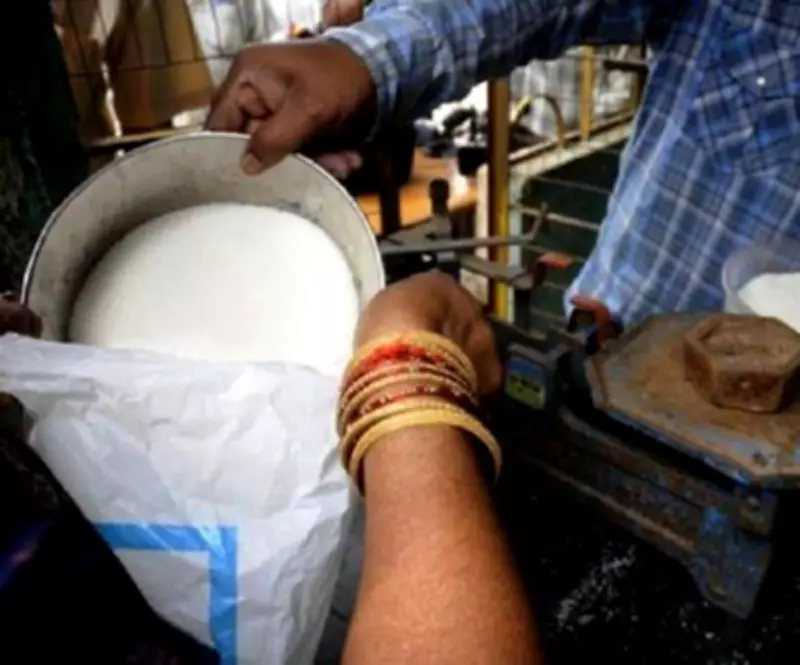
Government Releases Draft Amendment to National Food Security Act
The Department of Food and Public Distribution on Wednesday released the draft National Food Security (Amendment) Bill, 2026, proposing a shift from a fixed household quota to a per-person allocation of foodgrain for the poorest households. The draft seeks to eliminate inequities in the Antyodaya Anna Yojana (AAY) by providing 7 kg of foodgrain per person per month, subject to a maximum of 35 kg per household.
Under the existing National Food Security Act, 2013, Antyodaya households receive 35 kg of foodgrain per family per month, while priority households receive 5 kg per person per month. The ministry has invited stakeholder feedback until July 13.
Rationale Behind the Proposed Changes
According to the ministry, the draft aims to remove disparities and ensure fairness in the public distribution system. The existing household-based entitlement under AAY results in significant inequities depending on household size: smaller households receive a higher per-capita entitlement, while larger households receive a lower per-capita entitlement that may fall below that of priority households. The objective is to remove intra-category inequities, provide more rational allocation, and align entitlements with nutritional requirements.

Experts Question Household Cap and Aadhaar Linkage
Agriculture policy analyst Devinder Sharma welcomed the increase to 7 kg but questioned the 35 kg cap. "The increase in the foodgrain quota from 5 kg to 7 kg is heartening, but why cap the household limit? Although the government says it aims to reduce inequity, the move could end up doing just that, as bigger families with more members would be at a disadvantage. The same logic applies to a family of two or three members, who will now receive only 14 kg or 21 kg of foodgrain," Sharma told The Tribune.
Sharma also criticized the mandatory Aadhaar linkage for receiving foodgrain, warning it could exclude many beneficiaries. "The government is forcing the poor to go to bed hungry. In the same country, relatives of chief ministers buy and sell prime land at throwaway prices. Were they also asked for mandatory Aadhaar linkages?" he said.
Fiscal Implications and Criticism from Civil Society
Economist Praveen Kumar noted that the Bill could have significant fiscal and subsidy implications. "The government should explain how the move will not impose an additional burden on the exchequer," he said. The draft has also drawn criticism from state governments, advocacy groups, and the public over concerns about unequal distribution. Civil society organizations, including the Right to Food Campaign, have criticized the broader push towards mandatory Aadhaar linkage and targeted databases, arguing that reliance on biometric authentication often leads to wrongful exclusion of vulnerable populations.






