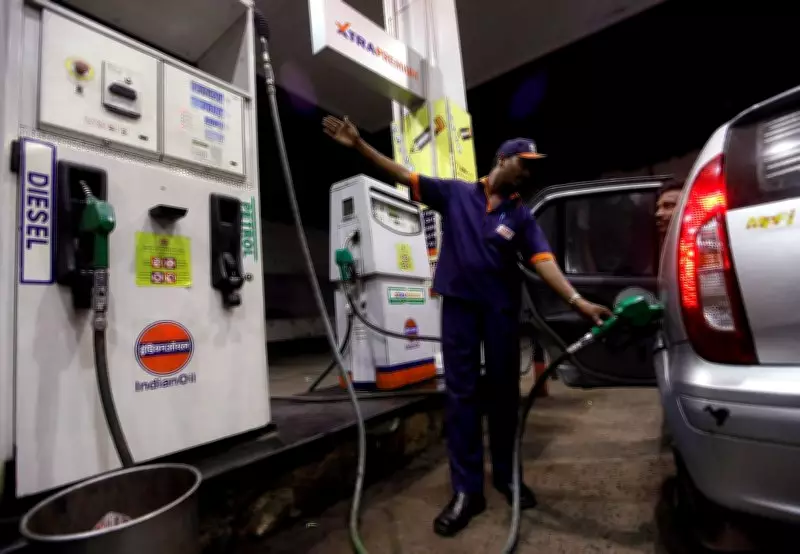
The Indian government's aggressive push for ethanol-blended petrol, advanced from 2030 to 2025, has sparked controversy. While officials tout benefits like energy security and farmer welfare, vehicle owners report engine damage and reduced mileage. Critics warn the policy lacks independent, peer-reviewed studies to substantiate claims.
Government Claims vs. Ground Reality
The Petroleum Minister asserts the policy is evidence-based, citing unpublished studies by industry associations. However, no independent research validates these claims. Car manufacturers now admit lower fuel efficiency, and consumer complaints of metallic and rubber part damage are mounting. If mileage drops even by 5%, as some reports suggest, the purported foreign exchange savings evaporate as drivers buy more petrol.
Food Security and Environmental Risks
Agriculture experts caution that ethanol blending threatens food security. Farmers may shift from food crops to water-intensive sugarcane, while ethanol producers use maize and rice as feedstock. Brazil's experience offers a cautionary tale: introduced in the 1970s due to sugar overproduction, it led to Amazon deforestation for fuel crops, causing massive greenhouse gas emissions. India's climatic and soil conditions differ, making large-scale energy plantations unsustainable.

Need for Rigorous Testing and Transparency
Like clinical trials for vaccines, new fuel technologies require field testing under varied conditions. The government must publish data on fuel efficiency, long-term engine impact, and real-world driving tests. A full environmental and carbon footprint analysis—from feedstock to tailpipe—is essential. Without this, the policy risks unintended harm.
Parallel Concerns with Delhi's EV Policy
Delhi's electric vehicle policy targeting two-wheelers and three-wheelers also faces scrutiny. While two-wheelers constitute 62% of vehicles, they contribute only 15% of transport-related PM2.5 emissions, according to a 2025 policy brief by Gufran Beig of NIAS, Bengaluru. In contrast, light and heavy commercial vehicles, under 3% of the fleet, account for 39% of emissions. Addressing commercial vehicles could yield greater health benefits. A fragmented approach may shift polluting vehicles to neighboring states, as warned by a December 2025 parliamentary committee on Delhi's air pollution.
Call for Evidence-Based Policymaking
Policymaking must rely on credible evidence, not short-term gains or political interests. Transparent, unbiased decisions driven by public good are vital. As new evidence emerges, policies should be reviewed and updated. At stake are public health, the environment, and the economy.