

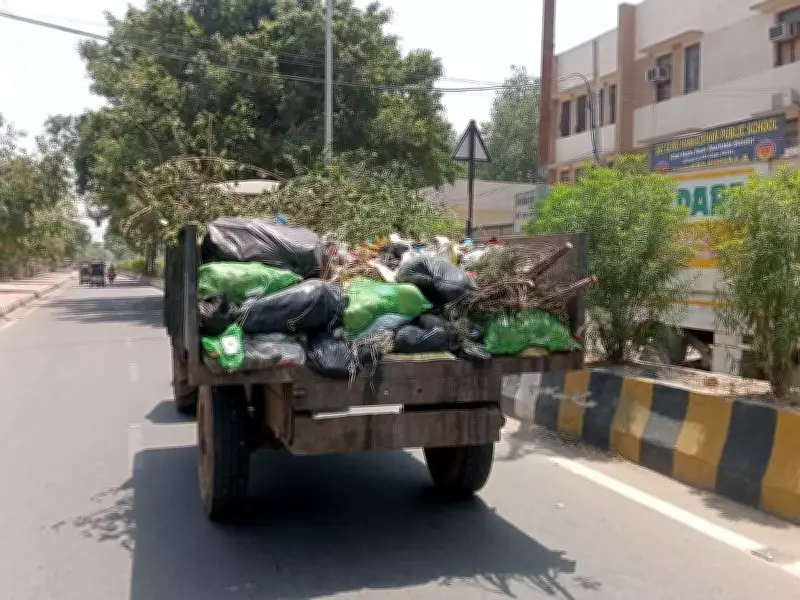
In Amritsar, the transportation of waste in uncovered trolleys continues unabated, raising serious concerns over public health, road safety, and environmental cleanliness. Residents have reported that heaps of garbage transported openly through residential and commercial areas not only emit foul odors but also lead to widespread littering along roads.
Frequent Sightings of Overloaded and Uncovered Trolleys
Overloaded and uncovered garbage trolleys are a common sight on city roads. These vehicles carry mixed waste piled above their edges without any protective covering, often transporting household and market waste to dumping sites. The problem escalates during windy conditions when lightweight materials such as plastic bags and paper fall onto roads and nearby green spaces.
Residents argue that despite ongoing cleanliness campaigns, the uncovered transportation of waste undermines efforts to maintain a clean urban environment. According to Rajesh Kumar, a resident of Ranjit Avenue, “Garbage often spills onto the road while these trolleys are moving. It creates an unpleasant sight and sends a wrong message about cleanliness.”

Health and Safety Risks Highlighted
Harpreet Kaur, another resident, pointed out the health risks: “The waste attracts flies and stray animals. During summer, the foul smell becomes unbearable for commuters.” Motorists have also expressed safety concerns. Gurpreet Singh, a daily commuter, said, “When plastic sheets or lightweight waste fly off the trolley, they can distract drivers and even cause accidents.”
Demand for Enforcement of Covered Transport
Residents have urged authorities to ensure that all waste transport vehicles are fitted with covers or netting systems to prevent littering. They noted that many cities have already adopted covered waste transportation as a standard practice to improve sanitation and reduce pollution. Calls have been made to the Amritsar Municipal Corporation to strictly enforce guidelines for waste collection and transportation, emphasizing that covering garbage during transit is a simple yet crucial step towards improving civic hygiene.






