

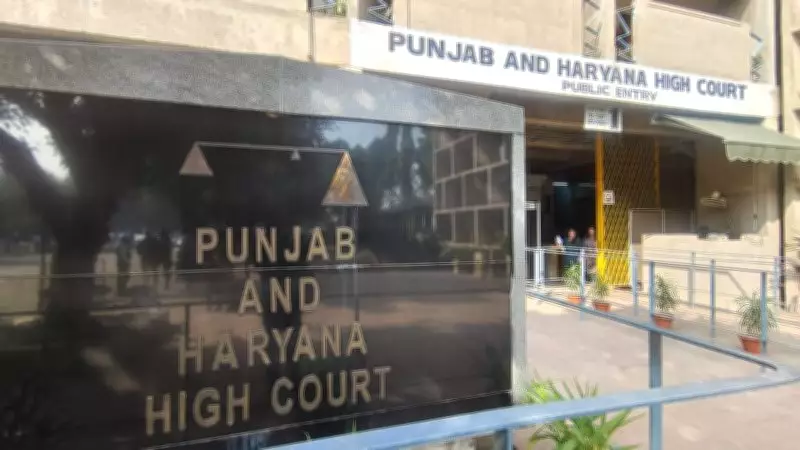
The Punjab and Haryana High Court has directed the Haryana government to extend the benefits of the 7th Pay Commission to employees working under the National Health Mission (NHM) in the state. The court held that denying revised pay scales despite approved Service Bye-laws, Finance Department concurrence, executive approval, and parity maintained with similarly situated employees was unsustainable in law.
Court Orders Revision with Arrears and Interest
Allowing a bunch of writ petitions, Justice Sandeep Moudgil ordered the respondents to revise the pay scales of the petitioners and all similarly situated NHM employees in Haryana in accordance with the 7th Pay Commission with effect from January 1, 2016. The court also directed payment of consequential benefits and interest at the rate of 6 per cent per annum.
The petitioners, engaged on a contractual basis under the NHM for various posts including Staff Nurse, Pharmacist, ANM, Lab Technician, Computer Assistant, and Medical Social Worker, had approached the High Court seeking implementation of the 7th Pay Commission and release of arrears of revised salary.

State's Own Proposal and Chief Minister's Approval
Addressing the controversy, Justice Moudgil observed: “The sole grievance raised in the present petition pertains to denial of the benefits of the 7th Pay Commission despite the existence of approved Service Bye-laws, repeated governmental recommendations and parity maintained by the State itself with similarly situated employees.” The Bench noted that the State Health Society had forwarded a proposal seeking approval for implementation of the 7th Pay Commission for NHM employees. The proposal specifically recorded that NHM employees rendered exceptional services during the Covid-19 pandemic and discharged their duties with dedication despite extraordinary challenges. It recommended extension of the 7th Pay Commission benefits to them. Referring to the proposal, the court noted that it ultimately received the Chief Minister’s approval on January 1, 2024.
Administrative Delay Cannot Defeat Approved Benefits
“The respondents have failed to place on record any material demonstrating that the said approval was ever withdrawn, superseded or rejected. Administrative delay or departmental indecision cannot be permitted to defeat a benefit which stands acknowledged and approved at the highest executive level,” Justice Moudgil added. The court further observed that employees working under the Haryana School Shiksha Pariyojana Parishad (HSSPP) had already received 7th Pay Commission benefits from January 1, 2016, after Finance Department approval and implementation of the revised pay structure.
Parity with SSA Model and Legitimate Expectation
Noting that the State adopted the SSA/HSSPP model while framing the Service Bye-laws governing NHM employees and earlier extended the benefits of the 6th Pay Commission on the same basis, Justice Moudgil held that the State was required to justify its refusal to grant a similar revision thereafter. Finding no satisfactory explanation on record, the court observed: “A mere reference to differences in funding patterns or the nature of schemes cannot constitute a valid or reasonable basis to deny equal treatment and sustain such distinction under Article 14 of the Constitution.” The court also held that the petitioners’ claim was supported by the principle of legitimate expectation, observing that uninterrupted application of the Bye-laws over a considerable period created a reasonable expectation that the existing pay structure and service conditions would continue to govern their employment.

Contractual Status Does Not Dilute Rights
Rejecting the argument that NHM employees could not seek parity with State Government employees or employees serving under comparable missions, the Bench observed that the service framework adopted for NHM employees was consciously patterned on that applicable to the Sarva Shiksha Abhiyan. It added: “The fact that the petitioners are contractual employees does not dilute their entitlement to protection against arbitrary State action.” The court noted that the petitioners were not seeking regularisation of service but only enforcement of the Bye-laws that governed their appointment and remuneration for a prolonged period. It further held that even in contractual engagements, service conditions could not be altered in an arbitrary or discriminatory manner when such conditions had been consistently recognised and applied by the State itself.
State Cannot Use Administrative Lethargy as Defence
“The petitioners are not seeking charity but they merely seek enforcement of a framework created by the State itself and repeatedly affirmed through its own decisions,” Justice Moudgil observed. Referring to the State’s obligations as a model employer, Justice Moudgil added that administrative lethargy, inter-departmental indecision or shifting stands could not become instruments for defeating the legitimate claims of employees who served the public healthcare system of the State for years together. “The State cannot be permitted to convert its own administrative shortcomings into a defence against a lawful claim, for that would amount to allowing the gatekeeper of justice to become its obstacle,” the court added.





