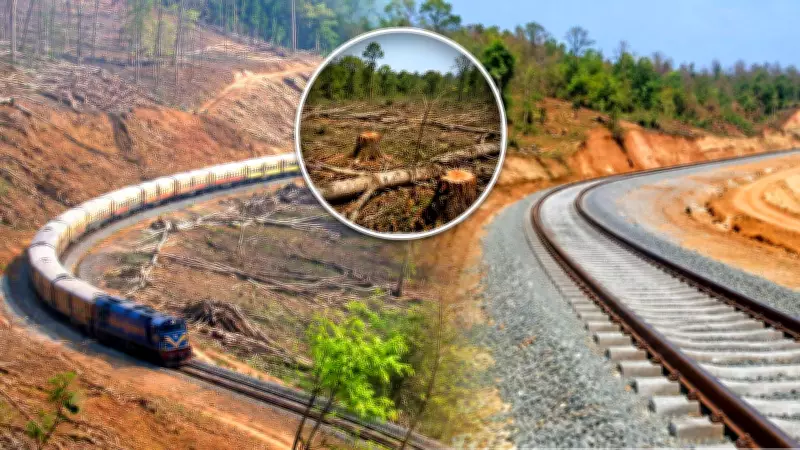
Indian Railways has ordered a formal inquiry into the controversial Panna–Khajuraho railway line alignment in Madhya Pradesh, following serious safety concerns and environmental backlash. The probe comes after it was revealed that over 54,000 trees were felled for the originally approved route, which has now been scrapped due to dangerous design flaws.
Background of the Project
The railway line between Panna and Khajuraho was approved in 2021 as part of efforts to improve connectivity in the region. However, the alignment featured six sharp curves, raising alarms about operational safety. After years of planning and clearance work, the route was abandoned, prompting the railways to re-evaluate the entire project.
Massive Tree Felling and Environmental Concerns
Environmental activists and local communities had raised objections to the large-scale deforestation. Official records show that over 54,000 trees were cut down before the project was halted. The railways have now been directed to implement compensatory plantation measures ahead of the monsoon season to mitigate the environmental damage.

New Alignment and Additional Forest Land
Railway officials have confirmed that a new alignment is being planned to replace the scrapped route. This alternative path will require additional forest land and may involve the felling of more trees, further escalating environmental concerns. The railways have assured that the new design will prioritize safety and minimize ecological impact.
Technical Committee Investigation
A technical committee has been constituted to investigate the design flaws and approval process that led to the problematic alignment. The committee will examine why the sharp curves were approved and whether proper safety assessments were conducted. Its findings are expected to lead to stricter oversight for future railway projects.
Compensatory Plantation and Mitigation Measures
In addition to the inquiry, Indian Railways has ordered immediate environmental mitigation measures. Compensatory plantation will be carried out on a large scale before the monsoon season to offset the loss of forest cover. The railways have also pledged to adopt more sustainable practices in future projects.
The Panna–Khajuraho case highlights the ongoing tension between infrastructure development and environmental conservation in India. The outcome of the inquiry is likely to set a precedent for how railway projects are planned and executed in ecologically sensitive areas.