

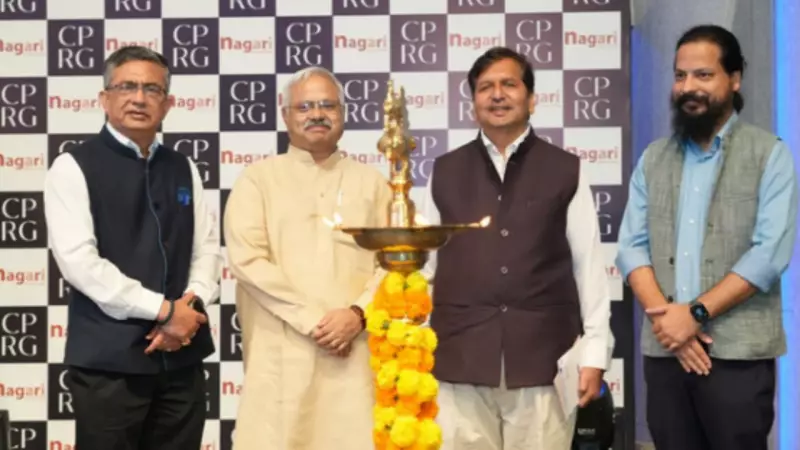
The Nagari – Future Cities Conclave, a significant gathering focused on the trajectory of India's urban landscape, successfully concluded in Delhi. Organized by the Center of Policy Research and Governance (CPRG) in collaboration with the National Stock Exchange (NSE), the day-long event fostered intensive discussions on strengthening the nation's urban transformation.
Key Voices on Urban Redesign
The conclave saw participation from a diverse group of policymakers, administrators, economists, and urban specialists. Their collective aim was to examine how Indian cities can be made more resilient, sustainable, and people-focused in the coming decades. The event commenced with critical interventions on shaping India's next phase of urban growth.
Maharashtra's Minister for Skill Development, Employment and Entrepreneurship emphasized that urban planning directly impacts daily life. He underscored the necessity for cities that actively support enterprise, promote walkability, and ensure safe access to workplaces, with a special focus on women's security.

In his keynote address, Sanjeev Sanyal, Member of the Economic Advisory Council to the Prime Minister, argued that India must fundamentally rethink the character and growth of its urban centers. Using examples like the Bandra Kurla Complex, he advocated for future urban design to be more diverse and locally grounded, fundamentally centered on how people move and utilize spaces.
Ashish Kumar Chauhan, Managing Director of NSE, highlighted the transformative shifts in infrastructure, technology, and governance that define modern cities. He pointedly noted the expanding role of artificial intelligence in urban management systems.
Thematic Panels Explore Core Urban Challenges
The conclave structured its discussions around four detailed thematic panels, each delving into a critical aspect of city-building:
- The structural aspects of city development and their implications for jobs and the economy.
- Developing indigenous, homegrown solutions for India's unique urban challenges.
- Building climate-resilient and sustainable urban infrastructure.
- The pivotal role of technology, AI, and automation in creating future-ready cities.
These discussions consistently highlighted the complex trade-offs and strategic choices involved in shaping large-scale urban systems.
The gathering was addressed by several other senior officials and experts representing a wide spectrum of institutions, including the Income Tax Department, Delhi Development Authority, RSS, National Book Trust, Tata Institute of Social Sciences, Hiranandani Group, MAHAGENCO, Edifice Consultants, Institute of Town Planners of India, and JSW Steel.
A Call for Collaborative, Long-Term Policy
Ramanand, Director of CPRG, framed Indian cities as the crucial intersection of the country's social, economic, and climate futures. He stressed that urban challenges demand a comprehensive approach involving multiple government arms and called for long-term, people-centred urban policy thinking. He also observed that existing mechanisms remain inadequate to address the full social and environmental dimensions of rapid urbanisation.
In the concluding session, Niranjan Hiranandani emphasized the need for long-term sustainable development, job-oriented skill building, and the removal of outdated laws that hinder urban growth. Milind Marathe highlighted the importance of literature in educating citizens about the history and evolution of their own cities.
The conclave ultimately underscored the imperative for sustained collaboration between government, industry, and research institutions to build adaptive, technology-enabled, and citizen-responsive cities. CPRG announced its commitment to continue creating platforms that support India's long-term urban vision, advance policy work on governance and technology adoption, and help shape future city development.

CPRG, an ICSSR-recognised think tank focused on participatory policy-making, organized this conclave as part of its Future of Society initiative. This initiative studies the evolution of governance, technology, and urban systems in changing environments. Over the past year, CPRG has hosted several national and international engagements, including the PadhAI Conclave 2025 on the future of education, and plans to continue convening multi-stakeholder forums that shape India's policy agenda.





