

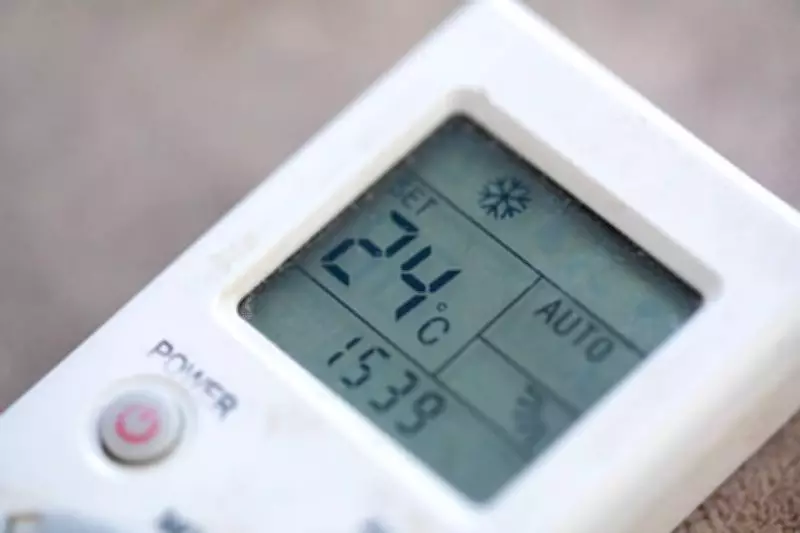
In many urban homes and offices across India, 24°C has become the default air conditioning setting. It is rarely a deliberate choice, but simply where the system resets when switched on. Cooling is now triggered more by routine than by immediate heat. Even when adjusted, thermostats tend to stay within 22°C to 24°C, a range that is rarely questioned. What makes this shift harder to notice is how quickly it becomes embedded in habit, how a routine gradually comes to define what 'normal' feels like.
Thermal Comfort Models: Outdated and Imported
The dominant indoor thermal comfort models in use globally, ASHRAE 55 and ISO 7730, were developed in controlled laboratory settings in the 1960s and 1970s. Their assumptions about clothing, activity levels and metabolic rates reflected temperate, largely Western workplaces. Studies from Nigerian classrooms, for instance, show that people are comfortable at temperatures ranging from 26.5°C to 31.1°C under natural ventilation, well above what these models prescribe. While newer ASHRAE standards allow for more flexibility, most buildings still rely on fixed temperature settings. In effect, the benchmark for comfort in much of the world still reflects climates and lifestyles far removed from the tropical cities where hundreds of millions now live and work.
The India Model for Adaptive Comfort (IMAC)
The India Model for Adaptive Comfort (IMAC), developed by CARBSE at CEPT University in Ahmedabad, draws on data from over 6,000 occupants across 16 office buildings spanning five climate zones. It maps how thermal comfort for Indians is closely linked to outdoor temperatures. In air-conditioned spaces, comfort typically falls within a seasonal range of 23.5°C to 25.5°C. Yet field observations show that most air-conditioned buildings continue to operate at around 22°C, often cooler than necessary.

Potential Energy Savings and Policy Gaps
CEPT's research suggests that aligning building operations with adaptive comfort standards could reduce cooling energy use in commercial buildings by up to 35%. These standards were incorporated into India's National Building Code in 2016. A decade later, they remain largely absent from everyday building operations.
Japan's Cool Biz Campaign as a Model
Japan's Cool Biz campaign offers a useful comparison. Launched in 2005, it set office air conditioning to 28°C, encouraged lighter summer dress and estimated 460,000 tonnes of CO2 reductions in its first year. Public support reinforced by visible political signalling helped reshape expectations around workplace comfort. A warmer office was no longer seen as poor management, but as part of a broader cultural change.
Cultural Perceptions and Equity Issues
Indoor temperature is closely tied to ideas of comfort, professionalism and quality. In many workplaces, cooler rooms are read as a marker of higher standards, even when they exceed physiological needs. This makes warmer temperatures harder to accept since they do not match with what people are accustomed to.
This matters as heat extremes intensify. India experienced widespread heatwaves in 2024, affecting health, productivity and daily life across multiple regions. Yet these impacts are not evenly distributed. Those without access to cooling, particularly in densely populated, low-income neighbourhoods, face the harshest conditions. At the same time, the energy demand created by overcooled offices and malls draws from the same shared electricity system, making overcooling an equity issue as much as an environmental one. The roots of this pattern are behavioural as much as technical, and that is also where the solutions lie.
Behavioural Mechanisms: Anchoring, Defaults, and Social Norms
What shifts outcomes is not awareness alone, but the way systems are designed to shape behaviour over time. Indoor temperature use is influenced by a small set of mechanisms that operate quietly in the background: the first temperature people experience, the settings that remain unchanged, what is made visible, what feels socially acceptable, and the degree of control people have.

At the centre of this is anchoring. The first stable temperature people repeatedly experience in a space becomes the reference point for what feels normal. Most occupants do not actively choose a setting each time they enter a room but respond to what is already established. If the starting point is 22°C, it gradually defines comfort. If it is 25°C or 26°C, expectations shift accordingly. A building set at 26°C from the outset is not asking people to adapt to change but defining what normal feels like from the beginning.
These early settings are reinforced by defaults, since people rarely adjust thermostat levels without a clear reason to do so, and by feedback, particularly when energy use becomes visible in real time rather than appearing as a monthly abstract figure. Perceived control also matters as people tend to use cooling more selectively when they can adjust it themselves rather than treating it as a constant background condition.
Social norms shape the broader boundary of what feels acceptable. Where coordinated campaigns and public signalling have reframed higher indoor temperatures as responsible rather than uncomfortable, expectations have shifted alongside behaviour. The effect is not only behavioural but cultural.
Building Design and Future Demand
Building design sets the physical conditions within which these behaviours play out. Features such as courtyards, shading, thermal mass and natural ventilation reduce heat gain without relying entirely on mechanical cooling. Studies in India show that traditional courtyard-based buildings often maintain comfort for longer during hot conditions than fully sealed air-conditioned spaces.
By 2035, room air-conditioners alone could contribute over 180 GW to peak electricity demand, close to 30% of the projected national total. A large share of this electricity still comes from coal. The question is not whether cooling should expand. It should, particularly for the hundreds of millions who still lack access to it. The question is what temperature that cooling is set to, and who decides.
Bridging the Research-Practice Gap
India already has a strong body of research, with CARBSE's adaptive comfort data among the most robust available for any tropical country. Although it is reflected in the building code, it has yet to be widely implemented in practice. Closing this gap is not only a technical adjustment. It is a shift in what cities treat as normal. In a warming climate, the temperature we treat as normal indoors will increasingly shape how livable cities are outdoors.
Views are personal





