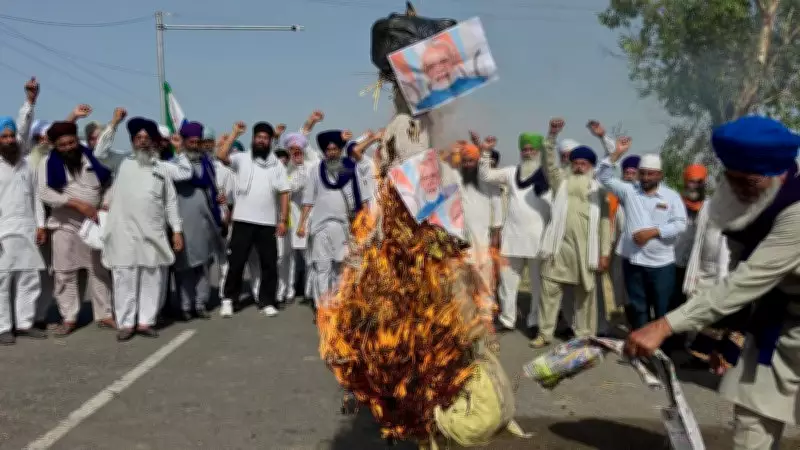
Farmers in the Lopoke area of Amritsar took to the streets on Wednesday to protest against the continuous rise in diesel and petrol prices. The protesters, led by various farmer unions, blocked a major road near Lopoke, causing traffic disruptions for several hours. They held placards and shouted slogans against the central and state governments, demanding immediate measures to curb the fuel price hike.
Impact on Agriculture
The farmers highlighted that the escalating fuel prices are severely impacting agricultural operations. Diesel is a critical input for running tractors, irrigation pumps, and other farm machinery. With the recent hikes, the cost of cultivation has increased significantly, reducing farmers' profit margins. Many farmers expressed concerns that if the trend continues, it would become unsustainable for small and marginal farmers.
Demands of the Protesters
The protesters presented a charter of demands, which includes:

- Reduction in excise duty and VAT on diesel and petrol.
- Bringing fuel under the Goods and Services Tax (GST) regime to ensure uniform pricing.
- Direct cash compensation to farmers to offset the increased input costs.
- Long-term measures to stabilize fuel prices and protect the agricultural sector.
Government Response
Local authorities, including police and administrative officials, reached the protest site to negotiate with the farmers. The protesters were assured that their demands would be forwarded to the higher authorities. However, the farmers remained adamant, stating that they would continue their agitation until concrete steps are taken. The protest was peaceful, and no untoward incident was reported.
The fuel price hike has been a contentious issue across the country, with several opposition parties and farmer organizations criticizing the government's policies. The protest in Lopoke is part of a larger movement among farmers who are grappling with rising input costs and stagnant crop prices.
Broader Context
India has witnessed a steady increase in fuel prices over the past few months, driven by global crude oil prices and domestic taxation policies. The government has defended the hikes, citing the need to generate revenue for development projects. However, critics argue that the burden falls disproportionately on the common man and sectors like agriculture, which are already under stress. The farmers' protest near Lopoke underscores the urgency of addressing fuel price volatility to ensure the viability of farming as a livelihood.