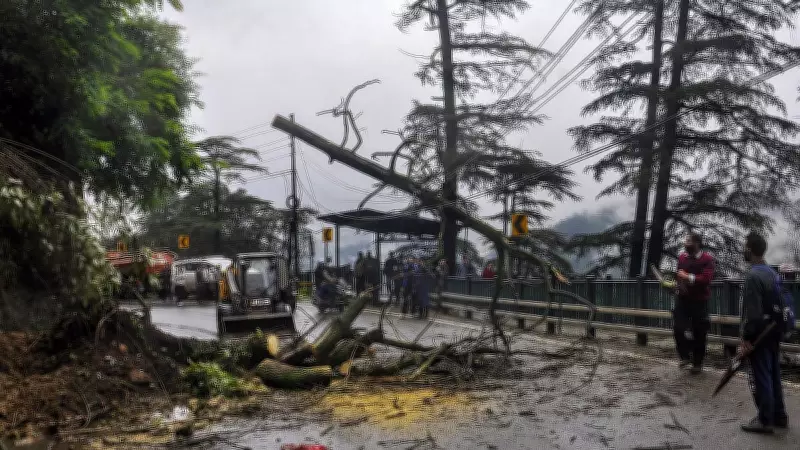
The National Highways Authority of India (NHAI) has informed the National Green Tribunal (NGT) that the devastating landslide in Shimla in 2025 was an act of God, thereby rejecting a compensation claim for damage to agricultural land. The incident, which occurred in the hill state of Himachal Pradesh, had caused significant destruction to property and livelihoods.
NHAI's Stand on the Landslide
In its submission to the NGT, NHAI argued that the landslide was a natural calamity beyond human control, absolving the authority of any liability for compensation. The claim had been filed by affected farmers whose agricultural land was severely damaged during the landslide. NHAI maintained that it could not be held responsible for losses resulting from such natural events.
Details of the Incident
The landslide took place in the summer of 2025 in the Shimla district, a region prone to geological disturbances due to its mountainous terrain. Heavy rainfall in the preceding days had loosened soil and rocks, leading to a massive slide that buried several hectares of agricultural land. Farmers in the area had sought compensation from NHAI, alleging that construction activities on a nearby highway project had exacerbated the situation.

NGT's Consideration
The NGT, which is hearing the matter, has yet to deliver its final verdict. Environmental activists and legal experts have weighed in, noting that while natural disasters are often termed acts of God, human interventions such as road construction can sometimes contribute to the severity of such events. The tribunal is likely to examine whether NHAI had taken adequate precautions to prevent landslides in the area.
Impact on Local Farmers
The affected farmers have expressed disappointment with NHAI's stance. For many, the agricultural land was their primary source of income, and the landslide has left them without means of livelihood. Local representatives have urged the state government to intervene and provide relief, regardless of the tribunal's decision.
Broader Implications
The case highlights the ongoing debate over liability for natural disasters in infrastructure projects. As India expands its road network in hilly regions, questions about environmental impact and compensation mechanisms have become increasingly pertinent. The NGT's ruling could set a precedent for future claims related to similar incidents.
In the meantime, the farmers await the tribunal's decision, hoping for some form of redressal to rebuild their lives. The NGT is expected to continue hearings in the coming weeks.