

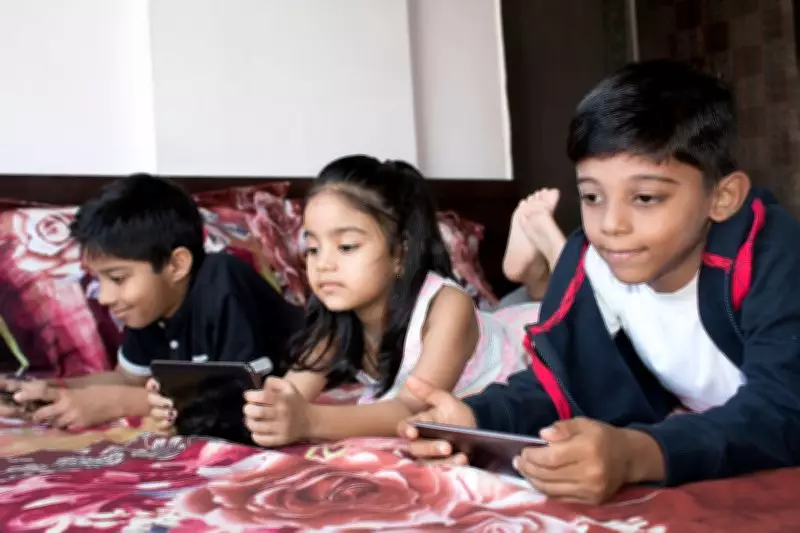
In late 2025, Australia became the first country to impose a nationwide ban on social media accounts for children under 16, triggering a global policy shift. The United Kingdom, Indonesia, and Malaysia have since announced similar measures, while France, Spain, Norway, and Canada are actively debating the issue. This marks a dramatic reversal from the earlier celebration of the Internet as a democratising force.
The Mental Health Crisis Driving the Ban
A generation raised with smartphones is showing rising rates of anxiety, depression, self-harm, and loneliness. Researchers continue to debate how much is directly attributable to social media, but the conversation has shifted. Most experts now agree that social media poses risks to children. The core question is what governments should do about it.
Supporters of age-based bans advance four main arguments. First, mental health: constant exposure to curated, idealised lives erodes teenagers' self-esteem, particularly among adolescent girls, linked to heightened anxiety and body-image distress. Second, addiction by design: infinite scrolling, push notifications, and algorithmic content are deliberate mechanisms to maximise engagement. Third, harmful content: despite moderation, children can easily encounter self-harm, eating disorders, pornography, and extremist ideologies. Fourth, cyberbullying: social media allows cruelty to follow children home, eliminating safe retreat.

Critics Question Evidence and Consequences
Critics argue that the scientific evidence is more contested than headlines suggest. Studies show correlations between heavy social media use and poor mental health, but correlation is not causation. They also point to what children would lose: social media is how many young people learn, connect, and find community, especially those who are isolated or marginalised. For a teenager in a small town, an online community may be a lifeline.
Sceptics warn of displacement effects: bans may push children toward less regulated, darker corners of the Internet. The problem, they argue, is not technology itself but the absence of education, guidance, and accountability. According to researchers, a simple prohibition may produce more harm than good if not paired with digital literacy programmes.
India's Unique Digital Divide
India faces a challenge of a different order. The country has undergone one of the most compressed digital transformations in history. Within a single generation, hundreds of millions of families acquired smartphones and internet access for the first time. This has created a striking paradox: in countless Indian households, the child is the most technologically literate person in the family.
A 12-year-old today may fluently navigate privacy settings, run multiple accounts, use VPNs to bypass restrictions, understand algorithmic recommendations, and switch between platforms with ease that leaves parents entirely at sea. The adults are not behind by a year or two; they are operating in a completely different world. This is a supervision vacuum.
Layered Strategy Needed, Not Blanket Ban
The standard liberal argument against government intervention holds that parents should decide what is appropriate for their children. But that depends on parents having the knowledge and tools to exercise meaningful oversight. In India, that assumption is, for a large and growing section of the population, simply not true. It is a structural reality produced by the speed of technological change.
A blunt social media ban for under-16s would be difficult to enforce in India due to sheer scale, patchy digital infrastructure, and ease of circumventing age restrictions. Doing nothing is equally untenable. What India needs is a layered strategy combining meaningful age-verification requirements on platforms with serious investment in digital literacy programmes aimed not just at children but at parents. School curricula must incorporate structured education about online risks. Legal protections for children in digital spaces need to be strengthened and enforced.

Policymakers must resist the temptation to treat parental supervision as the default solution when the supervision gap is itself part of the problem. Whether outright bans ultimately prove effective remains an open question. What is no longer in question is that unlimited, unsupervised access to social media carries real costs for children, and governments can no longer look away. For India, the stakes are especially high: its children are growing up in one of the world's largest and fastest-moving digital ecosystems, often several steps ahead of the adults responsible for guiding them.





