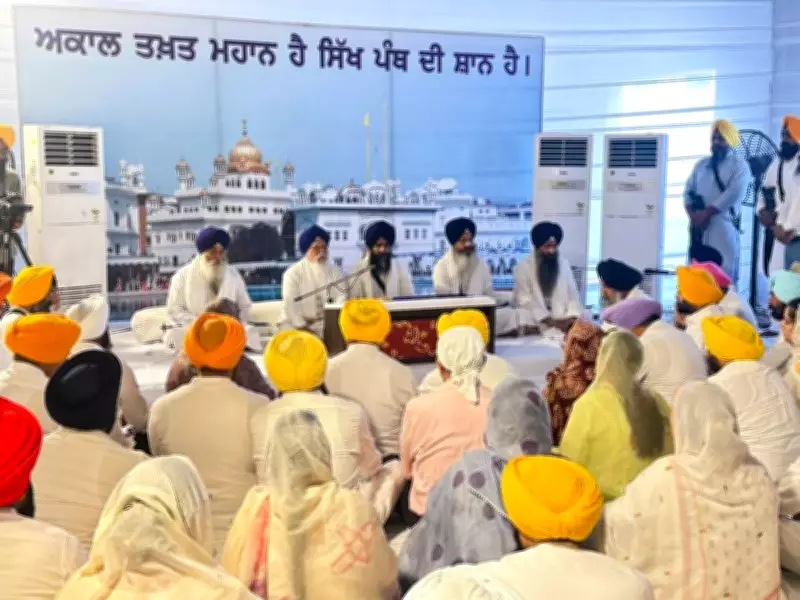
Akal Takht's Directive Sparks Debate on Religion and State
The Akal Takht, the supreme temporal seat of Sikhism, has directed the Punjab Government to amend the Jaagat Jot Sri Guru Granth Sahib Satkar (Amendment) Act, bringing into sharp focus the interplay between religion and the State in India. This directive has raised critical questions about the constitutional boundaries separating religious institutions from elected governments.
Constitutional Framework Governing Religious Freedom
The Indian Constitution guarantees every religious denomination the freedom to manage its affairs under Article 26. However, these rights coexist with the principles of secular governance and the rule of law. Legislative authority rests with democratically elected legislatures, and governments are accountable to the Constitution rather than to any religious body. The Supreme Court's landmark ruling in the SR Bommai case (1994) affirmed that secularism is part of the Constitution's basic structure.
Overreach or Legitimate Expression?
The intervention by the Akal Takht reflects what some see as an unsettling overreach. In a vibrant democracy, religious bodies, civil society organisations and citizens are entitled to express their views on public policy. Governments may consider such opinions alongside those of other stakeholders. However, constitutional legitimacy requires that legislative decisions should emerge through democratic deliberation, public consultation and judicially reviewable processes — not through religious directives.

Balancing Public Order and Free Speech
While the State is duty-bound to preserve public order and prevent communal tensions, criminal provisions must satisfy constitutional tests of equality, reasonableness and protection of free speech. Any law that is vague or selectively enforced cannot withstand scrutiny. There is a need for carefully drafted legislation that punishes deliberate acts of incitement without stifling legitimate debate, scholarship or artistic expression.
Ultimate Test: Constitutional Consistency
The ultimate test of the Jaagat Jot Sri Guru Granth Sahib Satkar (Amendment) Act will not be the stamp of religious approval but its consistency with the Constitution, which remains the supreme law of the land and the common framework governing a diverse society. The editorial underscores that the Constitution must guide all stakeholders in navigating this complex issue.