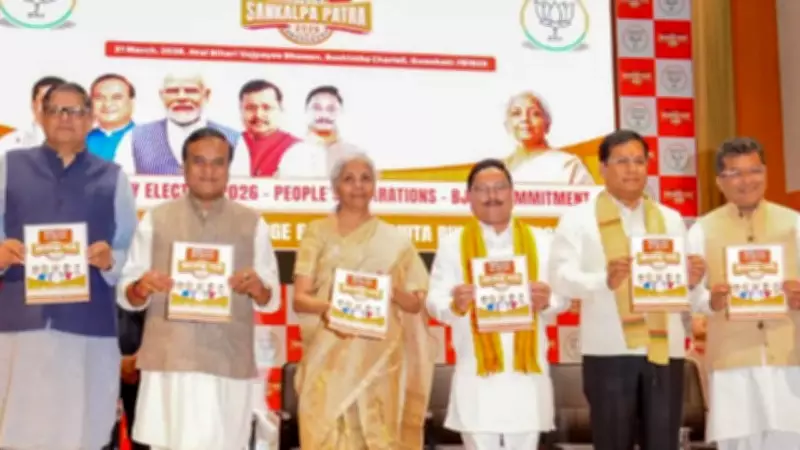
BJP Unveils Comprehensive 'Sankalpa Patra' for Assam 2026 Elections
Ahead of the crucial 2026 Assam Legislative Assembly elections, the Bharatiya Janata Party (BJP) has released its detailed manifesto titled "Sankalpa Patra," outlining 31 key commitments across multiple sectors. The document presents a vision for Assam's development with ambitious economic targets and significant welfare promises.
Major Economic and Infrastructure Commitments
Employment Generation: The manifesto commits to creating 2 lakh additional jobs through government recruitment, private sector employment, and support for MSMEs and startups. Sector-specific opportunities in aviation and maritime industries are also emphasized.
Infrastructure Investment: A massive Rs 5 lakh crore investment plan aims to position Assam as India's Eastern Gateway. This includes expressways, railway expansion with Vande Bharat routes, new airports, river transport systems, and landmark projects like the Gohpur–Numaligarh underwater tunnel.

Economic Growth Targets: The BJP aims to double Assam's economy to $150 billion by 2031 and further expand it to $300 billion by 2036 through industrial expansion, Special Economic Zones (SEZs), and electronics manufacturing initiatives.
Social and Legal Reforms
Uniform Civil Code Implementation: The manifesto promises implementation of a Uniform Civil Code (UCC) in Assam, while excluding Sixth Schedule and tribal areas to protect customary practices. Accompanying this are proposed laws against "Love Jihad" and land encroachment to regulate religious conversions through marriage and safeguard indigenous land rights.
Youth and Entrepreneurship Support: To promote self-employment, the BJP plans to support 10 lakh youth with financial aid up to Rs 5 lakh under schemes like the Atmanirbhar Abhiyan. Additional support includes Rs 25,000 assistance for graduates preparing for competitive examinations.
Key Development Initiatives
Flood Management: To tackle Assam's chronic flooding, the BJP has proposed spending Rs 18,000 crore in the first two years. The comprehensive plan includes strengthening embankments along the Brahmaputra and its tributaries, modern flood forecasting systems, drainage upgrades, and long-term river management strategies.
Education Expansion: The manifesto proposes "One District, One University" and ensuring medical and engineering colleges in every district. It promises free education from kindergarten to postgraduate level for economically disadvantaged students, recruitment of over 70,000 teachers, and Rs 8,000 crore investment to upgrade 1,000 schools.
Women Empowerment: A key promise involves increasing financial support under the Orunodoi scheme to Rs 3,000 per month and expanding coverage to more households. The manifesto also aims to create 40 lakh "Lakhpati Didis" (women entrepreneurs) and establish women-run community kitchens (Aair Pakghor) for livelihood and nutrition support.
Agricultural and Rural Development
Farmer Support: The BJP promises to strengthen farmer income through Rs 11,000 annual support (including PM-KISAN top-up), subsidies on tractors and power tillers, and distribution of two cows to 25 lakh poor families. Agricultural market modernization and storage infrastructure improvements are also planned.
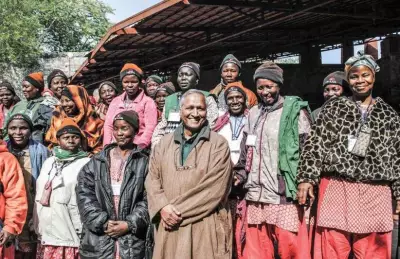
Tea Garden Workers Welfare: The manifesto emphasizes land rights (pattas), housing, and wage increases (up to Rs 500 per day) for tea garden workers. It includes targeted welfare schemes, financial assistance, and efforts to promote Assam tea products globally, alongside protections for tribal and indigenous communities.
Healthcare Expansion
Healthcare Mission: A Rs 50,000 crore healthcare mission will expand medical infrastructure across Assam, including advanced treatments like proton therapy for cancer. This initiative aims to establish Assam as a regional healthcare hub with modern facilities and specialized care options.
The comprehensive manifesto represents the BJP's strategic vision for Assam's development over the coming years, addressing both immediate concerns and long-term growth objectives across economic, social, and infrastructure domains.