

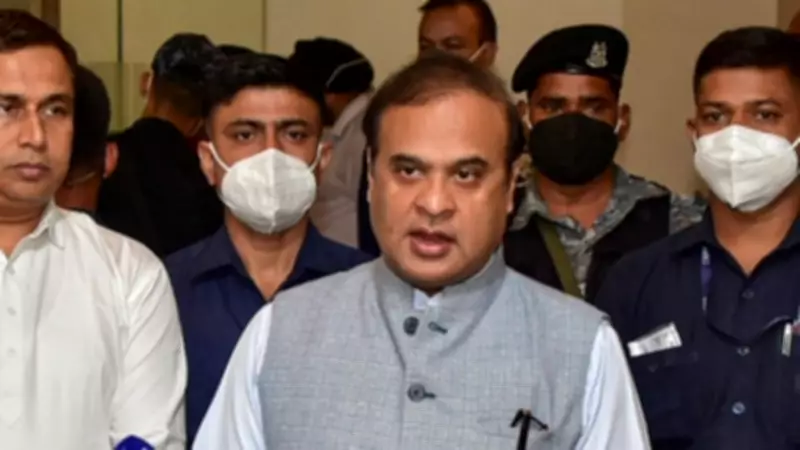
Assam Chief Minister's Remarks on Two-Child Norm Stir Controversy
A recent video featuring Assam Chief Minister Himanta Biswa Sarma has become the center of a heated debate across India. In the footage, Sarma is seen advocating for a "two-child norm" as a prerequisite for accessing various government schemes and benefits in the state. This statement has triggered widespread discussions on population control policies, social welfare, and political implications.
Details of the Video and Sarma's Statement
The video, which has gone viral on social media platforms, captures Sarma addressing a public gathering. He explicitly mentions that families adhering to a two-child limit should be prioritized for government assistance, including housing, scholarships, and other welfare programs. The Chief Minister emphasized that this approach aims to promote responsible family planning and sustainable development in Assam.
According to sources, Sarma linked this norm to broader goals of economic growth and resource management. He argued that unchecked population growth could strain public resources and hinder progress, making such measures necessary for long-term stability.

Political and Social Reactions
The video has elicited mixed reactions from political parties, activists, and the general public. Supporters of the Bharatiya Janata Party (BJP), which governs Assam, have praised Sarma for taking a bold stance on population issues. They contend that similar policies have been implemented in other states and are crucial for addressing demographic challenges.
However, opposition leaders and civil society groups have criticized the proposal, labeling it as discriminatory and unconstitutional. They argue that it could disproportionately affect marginalized communities and violate individual rights. Some have also raised concerns about potential enforcement mechanisms and their impact on gender equality.
Historical Context and Legal Framework
Assam has a history of population-related policies, including past discussions on a two-child norm for electoral candidates. The state's population growth rate has been a topic of political discourse, with various parties proposing measures to control it. Currently, India does not have a national law mandating a two-child policy, but some states have introduced incentives or disincentives based on family size.
Legal experts point out that any such norm would need to align with constitutional provisions, including the right to equality and reproductive rights. Previous attempts to implement similar policies in other Indian states have faced legal challenges and public backlash.
Implications for Government Schemes and Welfare
If implemented, the two-child norm could significantly alter the eligibility criteria for numerous government schemes in Assam. Programs related to education, healthcare, and poverty alleviation might require beneficiaries to comply with this limit. This has sparked debates on whether such conditions are ethical or effective in achieving social welfare objectives.
Proponents believe it could encourage smaller families and reduce poverty, while critics warn it might exclude vulnerable groups from essential services. The Assam government has not yet released an official policy document, leaving many questions unanswered about practical implementation.
Broader National and International Perspectives
This controversy comes amid global discussions on population control and sustainable development. Countries like China have implemented strict one-child policies in the past, with mixed results. In India, population management remains a sensitive issue, often intertwined with religious and ethnic dynamics.
Experts suggest that any policy should focus on education, healthcare access, and voluntary family planning rather than coercive measures. The debate in Assam reflects larger national conversations about balancing individual freedoms with collective goals.

Conclusion and Future Outlook
The video of Himanta Biswa Sarma has undoubtedly ignited a crucial dialogue on population policies in India. As Assam considers potential reforms, the outcome could influence similar debates in other states. Stakeholders are calling for transparent discussions and inclusive approaches to ensure that any measures adopted are fair and effective.
For now, the controversy underscores the complex interplay between politics, social justice, and governance in addressing demographic challenges. Further developments are awaited as the Assam government clarifies its stance and engages with diverse viewpoints.





