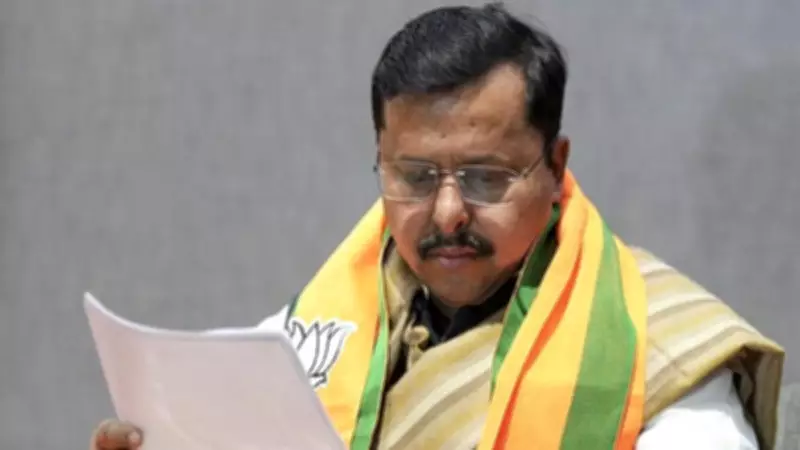
Bharatiya Janata Party president Nitin Nabin has launched a sharp critique against the Telangana government led by Chief Minister Revanth Reddy, accusing the regime of indulging in what he termed as 'appeasement politics'. This accusation comes amid ongoing political tensions in the state, highlighting a clear ideological divide between the ruling party and the opposition.
Contrasting Development Visions
In his remarks, Nabin drew a stark contrast between the policies of the Reddy-led administration and the developmental initiatives undertaken by the National Democratic Alliance government at the center. He specifically pointed to recent announcements by the NDA, including plans for high-speed rail corridors and the establishment of a turmeric board, as evidence of the central government's unwavering commitment to fostering growth and prosperity in Telangana.
NDA's Proactive Steps for Telangana
Nabin emphasized that these projects are not mere promises but concrete steps aimed at boosting infrastructure and supporting key agricultural sectors within the state. The high-speed rail corridors are expected to enhance connectivity and stimulate economic activity, while the turmeric board is designed to benefit farmers and promote the region's agricultural exports. According to Nabin, these efforts underscore a development-focused approach that prioritizes tangible outcomes over political maneuvering.

Allegations of Political Motives
The BJP president's comments suggest a belief that the Revanth Reddy government is more focused on short-term political gains through appeasement strategies rather than implementing long-term, inclusive development policies. This criticism aligns with broader narratives often used in Indian political discourse, where parties accuse each other of prioritizing vote-bank politics over substantive governance.
As the political landscape in Telangana continues to evolve, such exchanges are likely to intensify, shaping public perception and influencing future electoral dynamics. The debate over appeasement versus development remains a central theme, reflecting deeper ideological battles within the state's political arena.