

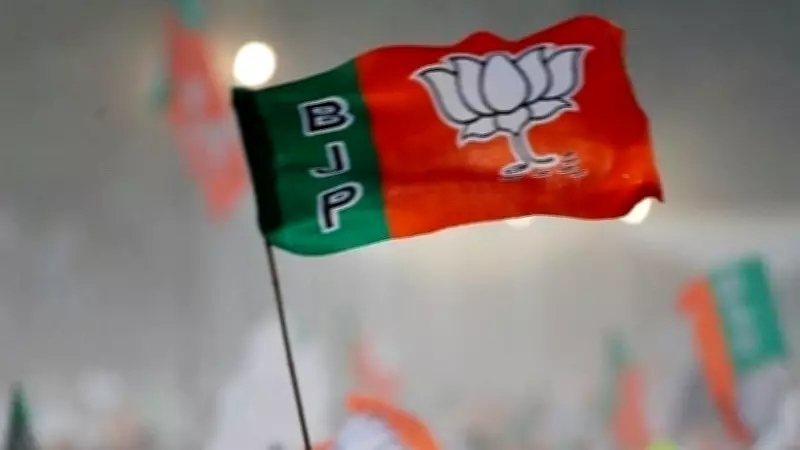
BJP Clinches Chandrapur Mayor Position with Shiv Sena (UBT) Alliance
In a notable political maneuver in Maharashtra, the Bharatiya Janata Party (BJP) has successfully secured the mayor's seat in Chandrapur, thanks to strategic support from Uddhav Thackeray's Shiv Sena (UBT) faction. This development underscores the shifting alliances and tactical collaborations shaping local governance in the state.
Election Results and Key Appointments
BJP corporator Sangeeta Khandekar was elected as the Mayor of Chandrapur, marking a significant victory for the party in the municipal corporation. Concurrently, Shiv Sena (UBT) corporator Prashant Danav was elected to the position of Deputy Mayor, highlighting the cooperative arrangement between the two political entities.
The election, held on February 10, 2026, reflects the ongoing realignments in Maharashtra's political landscape, where traditional rivalries are being set aside for pragmatic gains. This outcome is particularly impactful given Chandrapur's status as a key urban center in the Vidarbha region, often seen as a bellwether for broader political trends.

Implications for Maharashtra Politics
This alliance between the BJP and Shiv Sena (UBT) in Chandrapur signals a potential thaw in relations between the two parties, which have been at odds since the split in the Shiv Sena. The support from Uddhav Thackeray's faction enabled the BJP to overcome opposition from other political groups, including the Congress, demonstrating the fluid nature of coalition politics in the state.
Analysts suggest that this move could pave the way for similar collaborations in other municipal corporations across Maharashtra, as parties seek to consolidate power and influence at the local level. The election results also highlight the growing importance of regional dynamics in shaping national political strategies.
Broader Context and Future Outlook
The Chandrapur mayor election is part of a larger pattern of political realignments in India, where parties are increasingly forming unexpected alliances to achieve electoral success. For the BJP, this victory strengthens its foothold in Maharashtra, a state crucial for its national ambitions.
Meanwhile, Shiv Sena (UBT)'s decision to back the BJP candidate reflects a strategic calculation to gain leverage in future negotiations and maintain relevance in the state's political arena. As both parties navigate this new partnership, observers will be watching closely to see how it impacts governance and policy implementation in Chandrapur and beyond.
This development underscores the evolving nature of Indian politics, where pragmatism often trumps ideology, and local elections can have far-reaching consequences for national parties.






