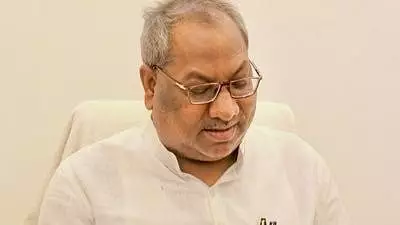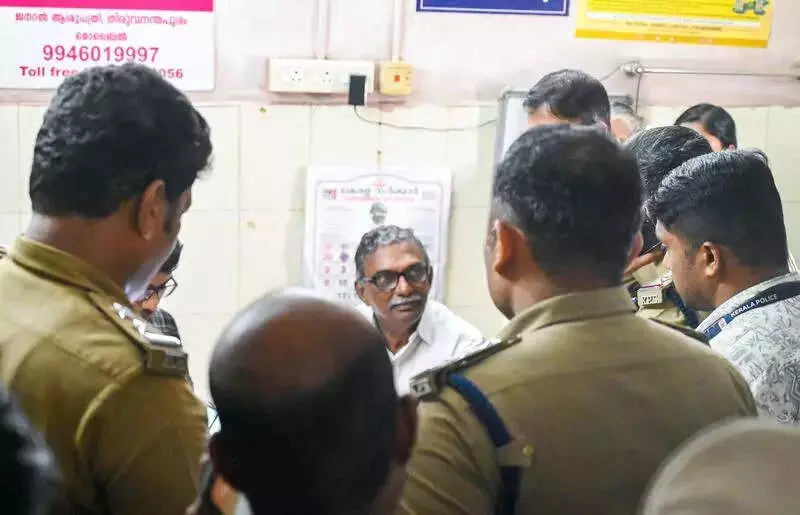
Former Travancore Devaswom Board (TDB) president A Padmakumar, currently held in the custody of a Special Investigation Team (SIT), has strongly contested the allegations that he acted alone in the controversial decision to hand over dwarapalaka idols for gold plating. He asserts that the decision was a collective one, sanctioned by the full board.
Collective Responsibility, Not Individual Fault: Padmakumar's Defense
In his bail application submitted to the Kollam Vigilance Court, Padmakumar posed a critical question: how could he be singled out as the sole accused? He maintained that he never took any decision independently to entrust the idols to the first accused, Unnikrishnan Potti, for the gold plating work. According to his submission, the move was approved with the full knowledge and permission of the board.
"All board members are equally responsible for this," Padmakumar stated, emphasizing the principle of collective responsibility for all decisions made by the board. He argued that it would have been impossible for him to make such a significant decision without the awareness and concurrence of other members.

Details on Document Discrepancy Emerge
Padmakumar also brought to light a specific detail regarding the documentation in the case. He pointed out that officials initially recorded the material as "brass sheets" but later corrected the record to "copper sheets," as the sheets in question were actually made of copper.
He used this instance to further his argument about shared oversight. If such a correction was made in the official records, other board members or even the board officials could have raised an objection or pointed out the error. The fact that they did not, in his view, underscores the shared nature of the board's decision-making process.
Legal Proceedings and Next Steps
The legal focus now shifts to the Kollam Vigilance Court, which is likely to consider Padmakumar's bail plea on Tuesday. His defense hinges on dismantling the narrative of individual culpability and establishing that the actions in question were undertaken by the Travancore Devaswom Board as a whole.
This case continues to draw significant attention, highlighting issues of administrative accountability and procedural oversight within temple management bodies. The court's decision on the bail application will be a key development in this ongoing investigation.