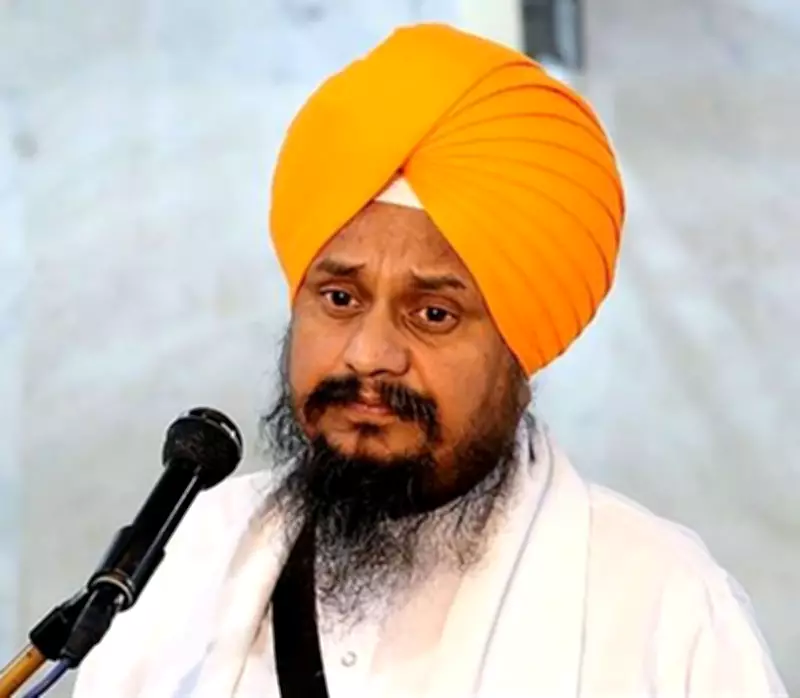
Giani Harpreet Singh, president of the Shiromani Akali Dal (Punar Surjeet), launched a sharp attack on leaders of the Shiromani Akali Dal (SAD) for their contradictory stance regarding the authority of the Akal Takht. His remarks came in response to the appearance of Aam Aadmi Party (AAP) MLAs before the Akal Takht in connection with the Jagat Jyot Sri Guru Granth Sahib Satkar (Amendment) Act, 2026.
Giani Harpreet Singh's criticism of SAD leaders
Referring to the controversy following the Akal Takht's directives issued on December 2, 2024, Giani Harpreet Singh expressed gratitude that AAP did not have legal advisers like those from the SAD. He claimed that if leaders such as Daljit Singh Cheema, Maheshinder Singh Grewal, and Parmjeet Singh Sarna had been advising AAP, they would have argued that the party's MLAs could not appear before the Akal Takht due to alleged constitutional complications or potential impact on the party's recognition. He further stated that these leaders would have questioned how the Akal Takht could direct an elected government to repeal or amend a law.
Sarcastic advice to AAP
Taking a further dig at the SAD (Badal) leadership, Giani Harpreet Singh sarcastically advised AAP to induct leaders such as Daljit Cheema, Meshi Grewal, and Sarna into the party, suggesting that their legal expertise would prove useful in similar situations. He highlighted the irony that the same SAD leaders who once argued that political parties could not comply with certain Akal Takht directives due to constitutional and Election Commission provisions were now silent on the issue.

Background of the controversy
The controversy stems from the Akal Takht's directives on December 2, 2024, which called for the repeal or amendment of the Jagat Jyot Sri Guru Granth Sahib Satkar (Amendment) Act, 2026. The AAP MLAs' appearance before the Akal Takht was seen as a move to address the religious body's concerns. However, Giani Harpreet Singh's criticism underscores the ongoing political tensions in Punjab over the balance between religious authority and constitutional governance.