

Gujarat Assembly Approves Amendment to Property Transfer Law
The Gujarat Assembly, on Wednesday, passed the Gujarat Prohibition of Transfer of Immovable Property and Provision for Protection of Tenants from Eviction from Premises in the Disturbed Areas (Amendment) Bill, 2026. This significant legislative move replaces the term "Disturbed Areas" with "Specified Areas" and introduces several key changes aimed at regulating property transactions in regions prone to communal disturbances.
Key Amendments and Expanded Scope
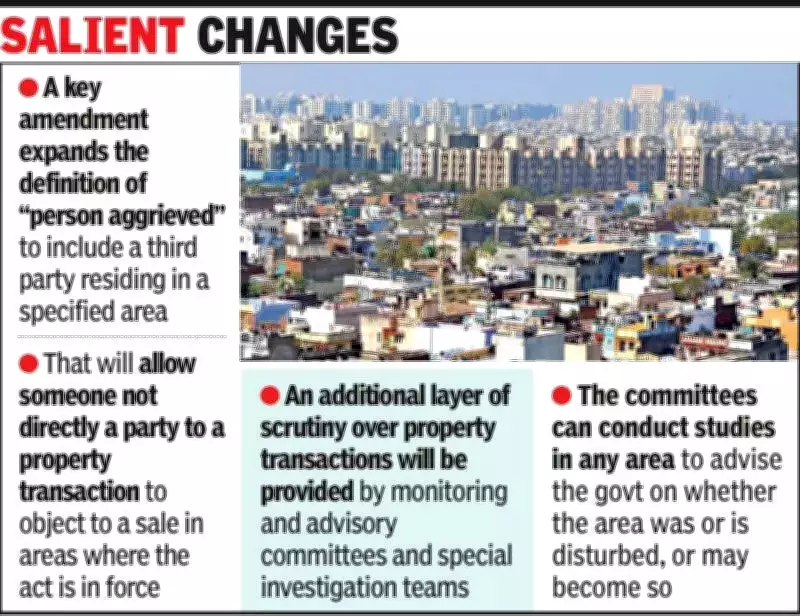
The bill was passed by a majority vote on the final day of the budget session, despite opposition from the Congress party. One of the most notable amendments expands the definition of "person aggrieved" to include third-party residents in specified areas. This allows individuals not directly involved in a property transaction to formally object to sales in areas where the act is enforced, thereby broadening community oversight.
Additionally, the amendment empowers district collectors to take temporary possession of properties in cases where mandatory prior-sale permission provisions are violated. Collectors can act suo motu or based on complaints from aggrieved persons, enhancing enforcement mechanisms against illegal transfers.

Introduction of Monitoring Committees and Special Teams
The bill establishes an additional layer of scrutiny through the creation of monitoring and advisory committees, as well as special investigation teams. These bodies will work closely with district collectors to prevent forced property sales in communally tense or disturbed areas.
According to the bill, "The monitoring and advisory committees can conduct studies in any area to ascertain and advise the government on whether the area was disturbed for a substantial period, and if it has become or is likely to become prone to communal disturbance which may result in involuntary displacement of people." The special investigation teams will assist these committees and collectors in examining cases for the grant of sale permissions, ensuring thorough vetting of transactions.
Government Rationale and Opposition Criticism
While tabling the bill, Minister of State for Revenue Sanjaysinh Mahida explained the government's rationale in the statement of objectives. He stated, "...it is experienced that in many cases properties are transferred in contravention of the provisions of the act and unscrupulous persons come into illegal possession thereby." He added, "To curb such illegal transfers of immovable property, and to protect the interests of the lawful owners, it is considered necessary to amend the aforesaid act."
During the assembly discussion, Congress MLA Imran Khedawala strongly opposed the bill, accusing the state government of introducing it for political gains by dividing votes along community lines. He argued, "The state government has introduced the bill merely for political gains by dividing votes based on communities. On the one hand, BJP abrogated Article 370 in Kashmir and encourages all to buy properties in Kashmir. But in Gujarat, it is putting restrictions on the sale of properties."
Khedawala further challenged the government to provide evidence of forceful property sales, saying, "I ask the government to provide details of any such forceful sale of properties and the number of FIRs filed or court cases filed. Such bills should not be allowed as they create rifts between communities. People of all communities have been living peacefully alongside each other and if BJP claims that law and order in the state is good, then why is it restricting people's rights?"
The passage of this bill marks a pivotal step in Gujarat's efforts to address property-related issues in sensitive areas, balancing protection of lawful owners with concerns over community harmony and individual rights.






