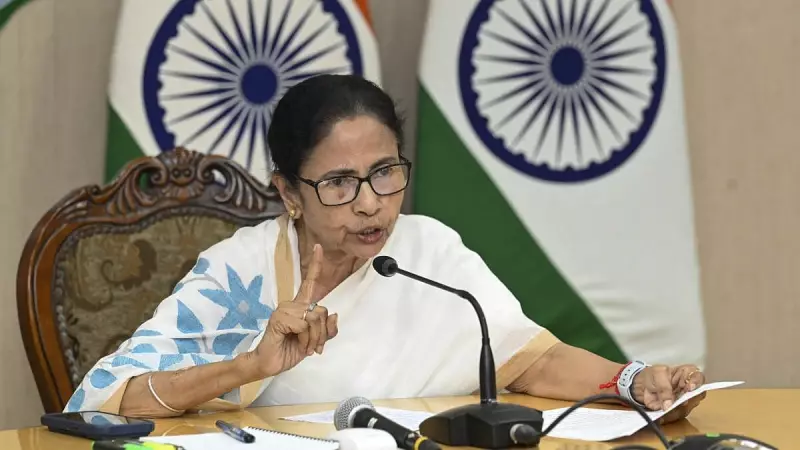
West Bengal Chief Minister Mamata Banerjee is intensifying her political campaign against the State Register of Indian Residents (SIR) with a series of public rallies across key northern districts of the state. This strategic move marks the second phase of her focused mobilization on this contentious issue.
Expanding the Protest Footprint
The Trinamool Congress (TMC) supremo is set to address gatherings in Malda, Murshidabad, and Cooch Behar. This expansion follows her first major rally held in Bongaon last week, located in the politically sensitive and refugee-dominated Matua belt. The choice of locations is significant, targeting areas with substantial populations living near the India-Bangladesh border.
In her previous address, Banerjee launched a sharp critique of the SIR revision process. She alleged that the exercise was being misused to intimidate and harass families residing in the borderlands. Her core argument frames the SIR not as a simple administrative procedure, but as a tool that sows fear among vulnerable communities, particularly those with historical refugee backgrounds.
The Political Backdrop and Allegations
The Chief Minister's campaign taps into deep-seated anxieties in Bengal, especially among the Matua community, a Scheduled Caste group with roots in East Bengal (now Bangladesh). The community's citizenship status has been a long-standing political issue. Banerjee's rhetoric positions her and the TMC as the primary defenders of these communities against what she portrays as a disruptive and exclusionary policy pushed by the central government.
By scheduling these rallies in quick succession, Banerjee aims to sustain momentum and keep the issue at the forefront of the state's political discourse. The districts selected for this phase are not only border districts but also represent crucial electoral battlegrounds, indicating a clear political strategy to consolidate support ahead of future electoral contests.
Implications and the Road Ahead
This escalated campaign phase signals a hardening of the TMC's stance against the SIR. It moves the debate from parliamentary discussion to direct public mobilization. The allegations of intimidation add a serious charge to the political confrontation between the state and central governments.
The success and turnout at these rallies in Malda, Murshidabad, and Cooch Behar will be closely watched as a barometer of public sentiment on the issue. Banerjee's ability to galvanize support in these regions could define the trajectory of the anti-SIR movement in West Bengal and influence the broader national conversation on citizenship documentation.
As the political temperature rises, all eyes are on how the narrative unfolds in these public meetings and what further steps the TMC plans in its campaign against the citizenship revision drive.