

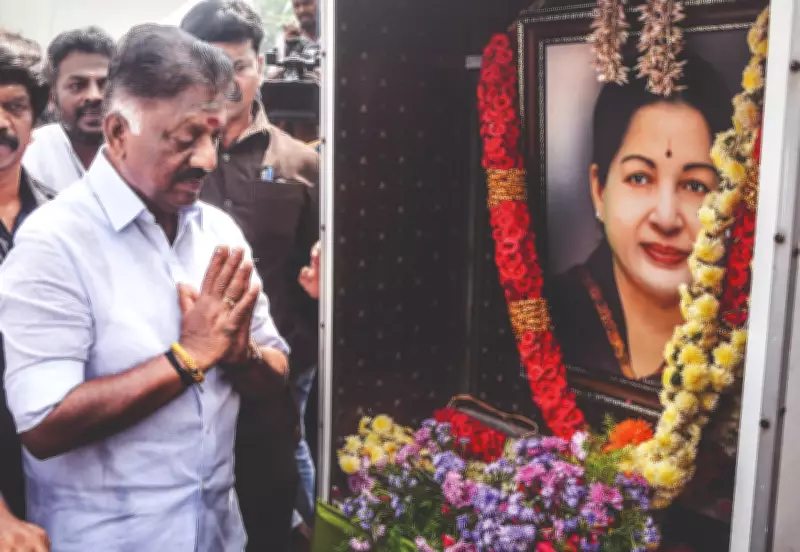
OPS and Ramadoss: From Political Pinnacles to Isolation in Tamil Nadu
In the dynamic landscape of Tamil Nadu politics, two stalwarts—O Panneerselvam (OPS) and S Ramadoss—who once wielded significant influence, now confront a stark reality of political wilderness. Their journeys, marked by loyalty, rebellion, and strategic missteps, offer a compelling study of rise and decline in the state's electoral arena.
The Decline of O Panneerselvam: A Tale of Indecisiveness
Come September, it will mark 25 years since O Panneerselvam first assumed the role of chief minister of Tamil Nadu. He held this prestigious position on two additional occasions, a testament to his unwavering loyalty towards the late chief minister J Jayalalithaa and her aide V K Sasikala. However, decades after his political entry from Periyakulam in Theni district, OPS stands at a critical crossroads.
AIADMK general secretary Edappadi K Palaniswami has firmly refused to re-induct him into the party. His supporters have largely abandoned him, and even the BJP has diminished the importance it once accorded him. T T V Dhinakaran, who previously allied with OPS against EPS, has now reconciled with the latter. A recent meeting in Theni saw only a few dozen attendees, with no notable political functionaries present.

This fall from grace has been gradual, not sudden. Former MLA A Subburathinam, once an OPS supporter now with the DMK, remarks, "It was a fall waiting to happen. We tried our best to stop it, but could not. He has now let leaders as well as cadres down." Initially seen as a dutiful lieutenant, OPS's rebellion in December 2016—the 'dharmayudham'—catapulted him to a larger stature, challenging Sasikala and emerging from Jayalalithaa's shadow.
Yet, his credibility eroded when he reconciled with EPS in 2017, citing party unity. Former AIADMK MP K C Palaniswamy notes, "His fall is of his own making." Supporters felt betrayed, and OPS failed to build an independent base. His friction with EPS over a Rajya Sabha seat for R Dharmar, from his own community, further isolated him.
Subburathinam attributes OPS's decline to "lack of political shrewdness, over-dependence on BJP, and reluctance to fulfil expectations of followers." Former AIADMK minister R Vaithilingam adds that OPS's "indecisiveness" and quiet demeanor, once seen as humility, no longer appeal to supporters. The BJP has reduced its seat offer from six to three, under AMMK's quota, highlighting his waning influence.
S Ramadoss: A Legacy Overshadowed by Leadership Transition
Parallel to OPS's story, S Ramadoss, the 86-year-old founder of the Pattali Makkal Katchi (PMK), faces a similar fate. For over three decades, Ramadoss was among the most influential vanniyar leaders in Tamil Nadu, aggressively courted by both DMK and AIADMK during elections. His alliance choices were closely watched, often decisive in tightly fought contests.
Today, Ramadoss finds himself overshadowed by his son, Anbumani Ramadoss, distanced from former allies, and isolated by a large section of supporters. The split from his son has significantly diluted his bargaining power. Party spokesperson K Balu, now an Anbumani supporter, observes, "Ayya was exceptional at reading the public mood and predicting outcomes. But he could not foresee that PMK would not function without Anbumani."
At his peak, Ramadoss thrived on caste assertion and political pragmatism. However, the decision to hand control to Anbumani altered the party's dynamics. Anbumani repositioned PMK as a policy-driven party, focusing on environmental protection and employment generation, while building connections with BJP leaders nationally.
Recent developments underscore Ramadoss's shrinking influence. Talks with BJP failed due to his resentment over the party's engagement with Anbumani. When he praised DMK in an apparent bid for an alliance, VCK chief Thol Thirumavalavan threatened to exit the DMK front if PMK was included. Now, Ramadoss is exploring a possible tie-up with Vijay's Tamilaga Vettri Kazhagam (TVK), a party barely two years old.

PMK MLA R Arul remains hopeful, stating, "This is only a temporary phase. After the election, Ayya's position will change. He will regain his influence." Supporters claim Ramadoss still commands respect among vanniyars, but political analysts suggest the coming election is more about retaining relevance than regaining influence.
Conclusion: Lessons in Political Survival
The trajectories of O Panneerselvam and S Ramadoss highlight critical lessons in Tamil Nadu politics. Indecisiveness, failure to build independent bases, and leadership transitions have led to their current isolation. As both figures navigate this wilderness, their stories serve as a reminder of the volatile nature of political fortunes in the state.
While supporters cling to hope for a resurgence, the political landscape has shifted, leaving these once-powerful leaders on the margins. Their experiences underscore the importance of adaptability, clear decision-making, and maintaining grassroots connections in sustaining political relevance.





