

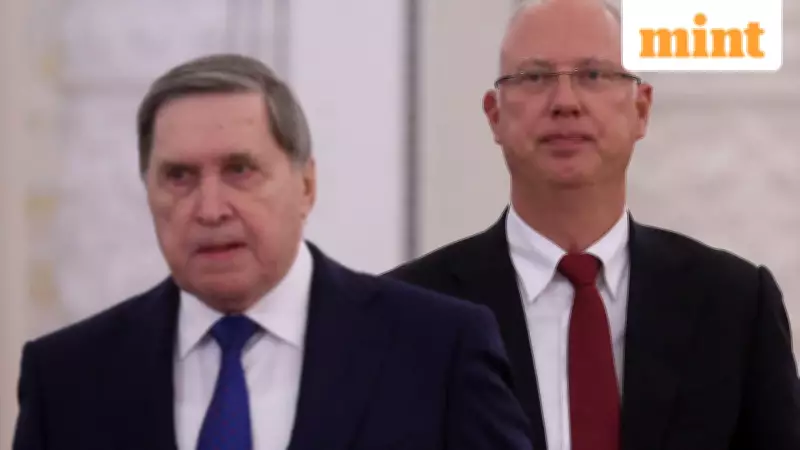
The Kremlin announced on Thursday, January 29, that Russia has once again extended an invitation to Ukrainian President Volodymyr Zelensky to travel to Moscow for crucial peace negotiations. This move comes as diplomatic efforts spearheaded by the United States to resolve the nearly four-year-long conflict in Ukraine are intensifying and showing signs of progress.
Kremlin Awaits Kyiv's Response to Renewed Invitation
Kremlin spokesman Dmitry Peskov revealed that Moscow has reiterated its invitation for President Zelensky to visit the Russian capital, but has yet to receive any formal response from Kyiv. "We have reiterated our invitation, but so far there has been no answer," Peskov was quoted as saying by the Interfax news agency. This statement underscores the ongoing communication gap between the two nations despite the flurry of diplomatic activities.
US-Mediated Talks Inject New Momentum into Stalled Negotiations
The Kremlin's comments emerged against the backdrop of fresh diplomatic initiatives following Washington-mediated peace talks held in Abu Dhabi last weekend. Officials involved in the process have indicated that these discussions have injected much-needed momentum into negotiations that had previously stalled. A further round of talks between Russian and Ukrainian delegations is scheduled to take place on Sunday in Abu Dhabi, highlighting the accelerated pace of diplomatic engagement.

US President Donald Trump, who has consistently advocated for a deal to end what he describes as Europe's most significant conflict since World War Two, expressed optimism earlier this week. He noted that "very good things" were unfolding in the peace process. Adding to the positive signals, an unnamed US official informed Axios that Zelensky and Russian President Vladimir Putin were "very close" to agreeing on a face-to-face meeting, potentially a breakthrough in the protracted conflict.
Fierce Fighting Persists Despite Diplomatic Push
Despite the renewed diplomatic efforts, intense fighting continues unabated on the ground in Ukraine. The country is currently grappling with widespread power outages following recent Russian missile strikes, exacerbating the humanitarian crisis. Both sides conducted another exchange of war dead on Thursday, a grim reminder of the ongoing human cost of the conflict.
The Kremlin declined to comment on reports suggesting that Moscow and Kyiv may have reached an agreement to halt strikes on each other's energy infrastructure. This silence leaves questions unanswered about potential behind-the-scenes understandings aimed at mitigating civilian suffering.
Deep Divisions Over Territory Remain a Major Stumbling Block
Significant disagreements persist, particularly concerning territorial control. US Secretary of State Marco Rubio identified the issue of "who gets what territory" as the central and "very difficult" problem to resolve. Russia is demanding that Ukrainian forces withdraw from parts of the Donetsk region still under Kyiv's control, while Ukraine has firmly rejected any proposal to cede territory not captured by Russian forces on the battlefield.
Kyiv argues that conceding such land would merely create a platform for future Russian advances, highlighting the deep-seated security concerns that complicate the negotiation process.
Other Sticking Points in the Negotiations
Beyond territorial disputes, several other critical issues remain unresolved:
- The potential deployment of international peacekeepers or monitors in post-war Ukraine to ensure stability and security.
- The fate of the Russian-controlled Zaporizhzhia nuclear power plant, a facility of immense strategic and safety importance.
Kremlin foreign policy aide Yuri Ushakov emphasized that any meeting between Putin and Zelensky would need to be "well prepared and results-oriented." He assured that Zelensky's safety would be guaranteed if he traveled to Moscow, addressing potential security concerns. However, Zelensky rejected a similar invitation last year, stating he could not visit the capital of a country that was "firing missiles at Ukraine every day." Instead, he suggested that Putin come to Kyiv, reflecting the ongoing tensions and mutual distrust.

Lavrov Questions Viability of US-Backed Security Guarantees
Russian Foreign Minister Sergei Lavrov cast doubt on the viability of US-backed security guarantees for Ukraine. He suggested that such guarantees would not bring lasting peace if they were designed to keep Ukraine's current leadership in power, indicating Moscow's skepticism about Western involvement in the settlement.
Ushakov added that he did not view territorial issues as the only key obstacle remaining in the talks, hinting at the multifaceted nature of the negotiations. This complexity underscores the challenges ahead as both sides navigate a path toward a sustainable peace agreement amid ongoing hostilities and deep-seated disagreements.





