Pathalgarhi Movement Reshapes Tribal Governance in Central India
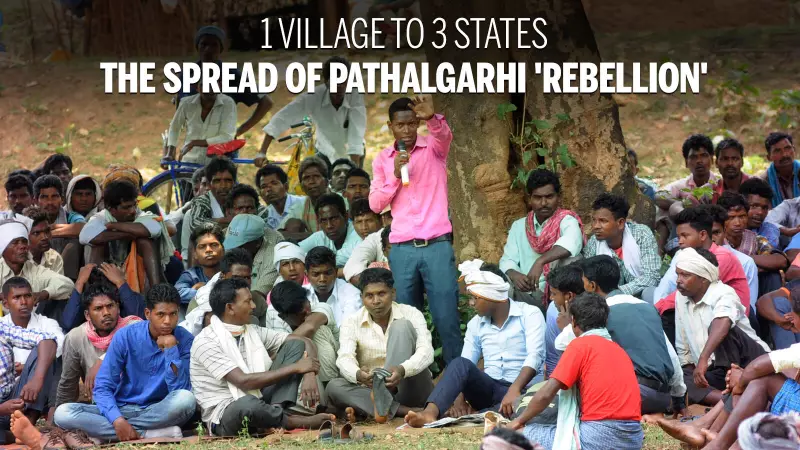
India's tribal heartland is witnessing a remarkable transformation as villages across three states assert their autonomy through the Pathalgarhi movement. What began as a single act of defiance has now evolved into a widespread demand for self-governance that continues to challenge traditional administrative structures.
The Birth of a Movement in Jharkhand
The revolution started on March 9, 2017, when Bhandra village in Jharkhand's Khunti district inaugurated its first pathalgarhi. This traditional practice involves erecting massive stone slabs that carry declarations of village independence from all forms of government authority.
Khunti district holds significant historical importance as the birthplace of two major tribal rebellions separated by a century. Today, the signs of change are immediately visible to visitors. Walls throughout the region boldly proclaim "Sab se upar gram sabha" (gram sabha above all else), signaling the fundamental shift in power dynamics that the movement represents.

Spread and Impact Across State Borders
The Pathalgarhi movement has demonstrated remarkable resilience and expansion since its inception. From its Jharkhand origins, the movement has successfully spread to neighboring states, creating what participants describe as 'autonomous' villages in Jharkhand, generating significant unrest in Odisha, and prompting substantial policy reconsiderations in Chhattisgarh.
This grassroots movement continues to gain momentum, challenging conventional governance models and asserting the primacy of traditional tribal self-rule mechanisms. The stone slabs serve as physical manifestations of this declaration, standing as permanent reminders of the villages' claimed sovereignty.
Ongoing Significance and Future Implications
Nearly eight years after the first pathalgarhi installation, the movement remains strong and continues to influence tribal-state relations across central India. The persistence of this movement highlights deep-seated issues regarding tribal rights, land ownership, and self-determination that have resonated across state boundaries.
The movement's ability to maintain its momentum while adapting to different regional contexts demonstrates the powerful undercurrent of tribal assertion in contemporary India. As more villages consider joining the movement, government authorities face increasing pressure to address the fundamental concerns driving this widespread demand for autonomy.