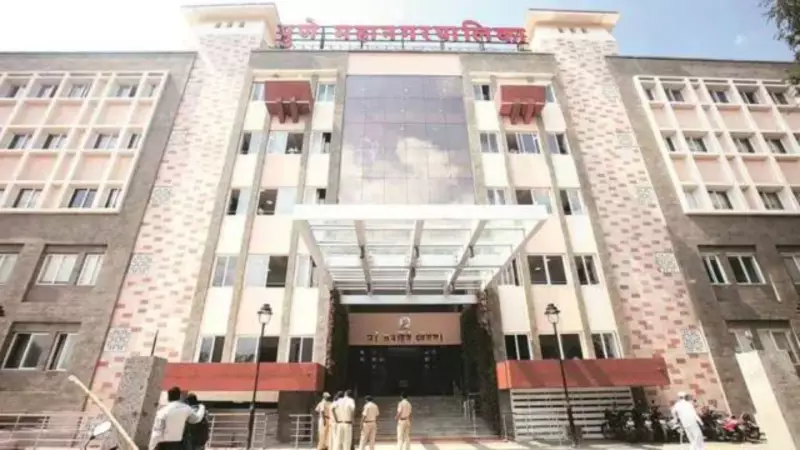
Pune to Elect Woman Mayor on February 6 After Four-Year Administrative Rule
The city of Pune is poised to witness a significant democratic transition as it prepares to elect a mayor on February 6, 2026, marking the end of nearly four years of rule by a state government-appointed administrator over the Pune Municipal Corporation (PMC). This long-awaited development comes after the declaration of election results and the completion of reservation processes for mayoral posts across Maharashtra's municipal corporations.
Administrative Transition and Election Schedule
Naval Kishore Ram, the Municipal Commissioner and Administrator of PMC, confirmed that the first general body meeting of the newly elected members will be held on February 6 to elect both the mayor and deputy mayor. "After discussion with the Pune divisional commissioner, the first general body meeting of the elected members of PMC to elect the mayor and deputy mayor will be held on February 6," Ram stated. He further added that the detailed program for these crucial elections would be announced shortly.
The PMC administration had formally approached the Pune divisional commissioner following the declaration of election results to appoint a returning officer. This officer will oversee the inaugural general body meeting and facilitate the election process through a show of hands by the corporators.

Political Landscape and Reservation Dynamics
The Bharatiya Janata Party (BJP) emerged as the dominant force in the recent PMC elections, securing an impressive 119 out of 165 seats. This commanding position ensures that the party's candidates will assume both the mayor and deputy mayor positions. Other parties secured significantly fewer seats, with the Ajit Pawar-led NCP winning 27 seats, Congress obtaining 15, NCP(SP) gaining 3, and Shiv Sena (UBT) managing just 1 seat.
In accordance with the state government's reservation policy for all 29 municipal corporations, the PMC mayoral seat has been specifically reserved for a woman candidate from the Open category. This reservation has set the stage for intense competition within the BJP, which boasts a substantial number of eligible women corporators.
Contenders for the Mayoral Position
Of the 89 women corporators elected to the PMC, the majority belong to the BJP, making them eligible to contest for the prestigious mayoral post. The party has 41 women corporators elected from the Open category alone, creating a competitive field with both experienced veterans and promising newcomers.
The race features several notable contenders:
- Varsha Tapkir: The most experienced candidate, having been elected for the fourth consecutive time, she brings considerable institutional knowledge to the table.
- Mansi Deshpande and Manjusha Nagpure: Both elected for the third time to the PMC, they present strong competition. Deshpande is the sister-in-law of a minister, while Nagpure achieved the rare feat of being elected unopposed.
- Ranjana Tilekar: Mother of sitting BJP legislator Yogesh Tilekar, she adds political lineage to the contest.
- Vasanti Jadhav and Smita Vaste: Both have previously served as PMC corporators, bringing valuable past experience to their candidacies.
Additionally, six women who were elected to the PMC from the general category, competing directly against male candidates, are being viewed as potential dark horse contenders. Among the fresh faces entering the political arena are Swarda Bapat, daughter-in-law of former city MP Girish Bapat, and Nivedita Ekbote, daughter of former corporator Jyotsana Ekbote.
Significance of the Upcoming Election
The February 6 election represents more than just the selection of a new mayor; it symbolizes the restoration of democratic governance in Pune after an extended period of administrative rule. The outcome will determine who leads India's cultural and educational hub through its ongoing urban development challenges and infrastructure projects.

With multiple qualified candidates vying for the position, the BJP faces the delicate task of selecting a candidate who can effectively address Pune's complex urban issues while maintaining party unity. The election promises to be a closely watched event that will shape the city's political and administrative direction for the coming years.