

Parties Turn to History for Political Connect
As the 2027 Punjab Assembly elections approach, political parties are increasingly invoking the state's historic figures to forge a connection with voters. In March 2022, Aam Aadmi Party (AAP) Chief Minister Bhagwant Mann held his oath-taking ceremony at Shaheed-e-Azam Bhagat Singh's ancestral village Khatkar Kalan, emphasizing themes of revolution, youth power, and sacrifice. The party wore kesari turbans and displayed portraits of Bhagat Singh and Dr. B.R. Ambedkar to underline its message.
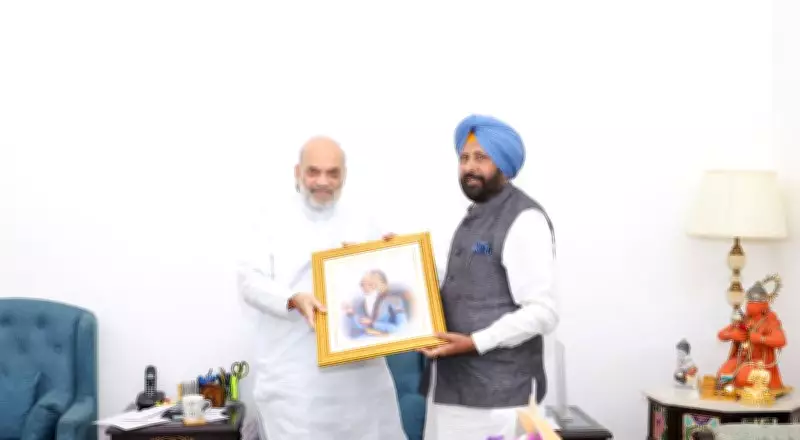
Now, the Bharatiya Janata Party (BJP) has turned to the legacy of Sher-e-Punjab Maharaja Ranjit Singh. Newly appointed BJP Punjab chief Kewal Singh Dhillon installed a portrait of the Maharaja at the party's state headquarters in Chandigarh. BJP national president Nitin Nabin, during a visit to Amritsar, stated the party aims to revive Maharaja Ranjit Singh's governance model in Punjab.
Sarkar-e-Khalsa: A Governance Model for Today?
The BJP has invoked the concept of Sarkar-e-Khalsa, a principle where power rests in collective service and public welfare. BJP national secretary and MP Tarun Chugh described Maharaja Ranjit Singh as an embodiment of stability, sovereignty, and self-respect. According to Chugh, "For the BJP, Sarkar-e-Khalsa is not a historical artefact preserved in a museum; rather, it is a vision of governance that directly speaks to what Punjab has lost and what it must reclaim. The rule of Maharaja Ranjit Singh was based on three key pillars: egalitarian governance, communal harmony, and a strong administration that delivers results."

Maharaja Ranjit Singh is remembered as a symbol of a "golden age" when Punjab was politically sovereign and economically prosperous under the Sikh Empire. His governance model derived legitimacy from Panthic values, political statecraft, and sovereignty, neither purely religious nor fully secular.
Historical Symbols in Contemporary Politics
This historical appeal has long been used by parties. Former Chief Minister Parkash Singh Badal introduced the Sangat Darshan concept inspired by the Darbar-e-Khalsa, while Captain Amarinder Singh frequently referenced Sher-e-Punjab. The Shiromani Akali Dal (SAD) government invested in projects like the Maharaja Ranjit Singh Panorama and war museum to preserve his memory.
However, political scientist Jagroop Singh Sekhon notes that while symbols hold emotional significance, they may not guarantee electoral support. "People no longer vote only on the basis of emotional connections or symbolic narratives. They want a roadmap and they want results. Symbols do not necessarily translate into electoral support unless they are backed by delivery," he said. Sekhon added that Punjab's political decline stems from a lack of powerful leadership and modern political icons, forcing parties to borrow from history.
Voters Seek Accountability Over Symbolism
As the 2027 polls near, the effectiveness of historical invocations remains uncertain. While the BJP's emphasis on Maharaja Ranjit Singh's governance may resonate with some, voters increasingly prioritize concrete issues like employment, infrastructure, and law and order. The party has not yet provided a clear blueprint for implementing the Sarkar-e-Khalsa model, raising questions about its alignment with BJP's national ideology.
Meanwhile, AAP continues to leverage Bhagat Singh's revolutionary image, but faces scrutiny over its governance record. The coming election will test whether historical symbols can still sway Punjab's electorate or if voters demand more tangible outcomes.






