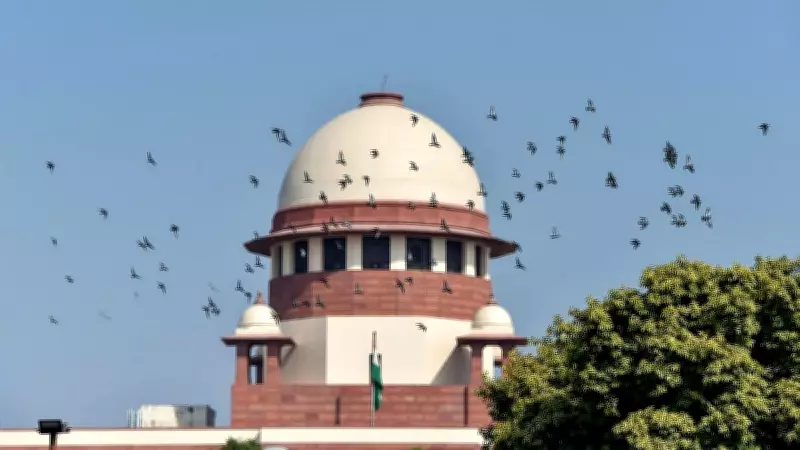
The Supreme Court on Wednesday questioned whether children of well-off backward class families, including those whose both parents are IAS officers, should be entitled to reservation benefits. A bench of Justices B V Nagarathna and Ujjal Bhuyan made the observation while hearing a petition filed by Raghavendra Fakeerappa Chandranavar, who challenged a Karnataka High Court order upholding his exclusion from reservation benefits.
Background of the Case
The petitioner, Raghavendra Fakeerappa Chandranavar, had sought reservation benefits under the Category IIA (backward class) quota in Karnataka. However, his application was rejected on the grounds that his family's income and social status were too high to qualify for the benefits. The Karnataka High Court had earlier upheld this decision, leading Chandranavar to approach the Supreme Court.
Supreme Court's Observation
During the hearing, the bench remarked that if both parents are IAS officers, the children cannot be considered socially or educationally backward. The court questioned the rationale behind granting reservation to such individuals, emphasizing that the purpose of reservation is to uplift those who are genuinely disadvantaged.

The bench also noted that the creamy layer principle, which excludes the affluent among backward classes from reservation benefits, should be strictly applied. The court observed that the children of IAS officers, even if they belong to backward castes, are likely to have access to better education and opportunities, making them ineligible for quota benefits.
Legal Arguments
The petitioner's counsel argued that the creamy layer exclusion should not apply to all backward classes uniformly and that the state government had the discretion to set income limits. However, the bench countered that the constitutional mandate for reservation aims to address historical discrimination and social backwardness, not economic status alone.
The court also referred to its earlier judgments, including the Indra Sawhney case, which established the creamy layer concept. It stressed that reservation policies must evolve to ensure that benefits reach the most deserving sections of society.
Next Steps
The Supreme Court has adjourned the matter for further hearing, seeking responses from the Karnataka government and other stakeholders. The final verdict is expected to have significant implications for reservation policies across the country, particularly for backward classes with high-income families.
The case highlights the ongoing debate over reservation in India, balancing social justice with meritocracy. The court's decision could redefine eligibility criteria for quota benefits, ensuring that they target the truly disadvantaged.