

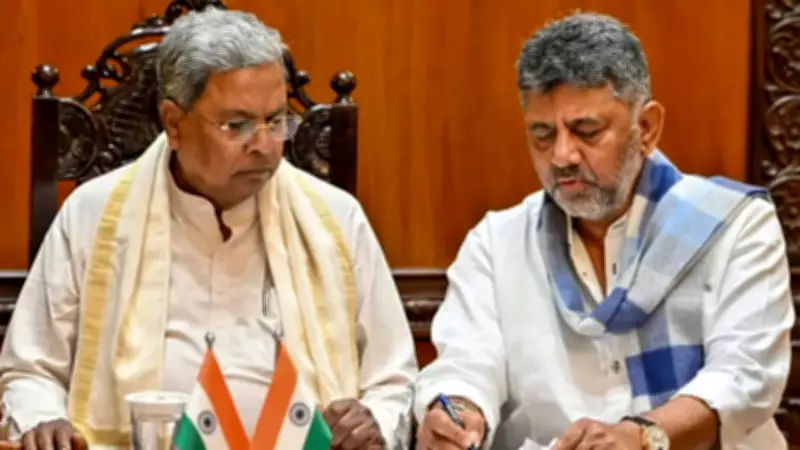
BENGALURU: The move to replace Chief Minister Siddaramaiah with DK Shivakumar is likely to create more political challenges than benefits for the Congress party in Karnataka, given Siddaramaiah's strong mass appeal among the party's core Ahinda support base, which includes minorities, backward classes, and Dalits.
Siddaramaiah's Enduring Influence
A party veteran with decades of grassroots political influence, Siddaramaiah continues to enjoy significant support among Kurubas, Muslims, Dalits, and several backward communities. This makes him one of the Congress party's tallest social coalition builders. Party leaders privately fear that his exit could trigger disappointment among these communities ahead of the 2028 assembly elections, potentially weakening the carefully built social arithmetic of the Congress party. The Bharatiya Janata Party (BJP) and Janata Dal (Secular) are also expected to aggressively target any possible dissatisfaction among these sections to regain political ground in key regions of the state.
Lack of Widespread Support for Shivakumar
While DK Shivakumar is regarded as a strong organisational leader and troubleshooter, Congress functionaries say he does not yet enjoy the same widespread emotional connect and social support base among Ahinda communities that Siddaramaiah built over decades through welfare politics and backward class mobilisation. Former Chief Minister and BJP MP Basavaraj Bommai remarked, “If Rahul Gandhi removes Siddaramaiah, the only OBC chief minister in Congress, it will prove that he is not for OBCs. His decision will impact the INDI alliance; OBC members in the alliance will not take this decision kindly.”

Congress's Balancing Act
Acutely aware of the risk of eroding its Ahinda support base, the Congress high command is reportedly working on a major balancing exercise. As part of the plan, it is considering PWD Minister Satish Jarkiholi, a Scheduled Tribe leader and Siddaramaiah confidant, for the Karnataka Pradesh Congress Committee (KPCC) president's post. Jarkiholi stated, “I have already expressed my intent to lead the party but none from the high command have approached me yet. We will wait for the breakfast meeting on Thursday.” Besides other changes in the KPCC organisation, the Congress brass is also reportedly considering a “multiple deputy chief minister” formula if Shivakumar takes over as chief minister. Sources indicate that names being discussed for the proposed posts include Yathindra Siddaramaiah (Kuruba community), Priyank Kharge (Dalit), either UT Khader or BZ Zameer Ahmed Khan (Muslim), and MB Patil or Eshwar Khadre (Lingayat).
Younger Cabinet in the Works
Sources also say that Rahul Gandhi wants Karnataka to take a cue from Kerala and install a younger cabinet. This would mean that at least 25 of the current ministers could be dropped.
The Crux: Kuruba Vote
But it is the Kuruba and minority vote that has the Congress party worried. “The decision to ease Siddaramaiah out could backfire if he is seen to be unhappy over his exit,” a party functionary said. “If that happens, the 2028 elections could see a strong anti-Congress wave.” Party functionaries note that Kuruba voters play a decisive role in 60 to 70 seats across north Karnataka, especially in regions where Lingayats remain politically dominant. With Shivakumar, a Vokkaliga, emerging as Siddaramaiah's likely successor, there are concerns that Lingayat voters, traditionally aligned with the BJP, could consolidate against Congress. Congress brass believes the party may make some gains among Vokkaligas, but it risks alienating Kuruba voters in parts of south Karnataka where the two communities are seen as political rivals.
Basavaraj Rayareddi, economic adviser to Siddaramaiah, said, “We definitely expect a backlash from the Kuruba community in north Karnataka districts and may lose about 5% of the community votes.” Congress is also worried about the possible impact the Special Intensive Revision of Electoral Rolls would have on Muslim voters in north and central Karnataka. “While Muslims may have no alternative but Congress in the current political climate, Siddaramaiah's exit will definitely leave his successor with an uphill task in convincing the minority community that he will be as accommodative as his predecessor,” a Muslim community leader said.






