Vijay Attributes DMK's Rs 2000 Aid Announcement to Women's Support Surge
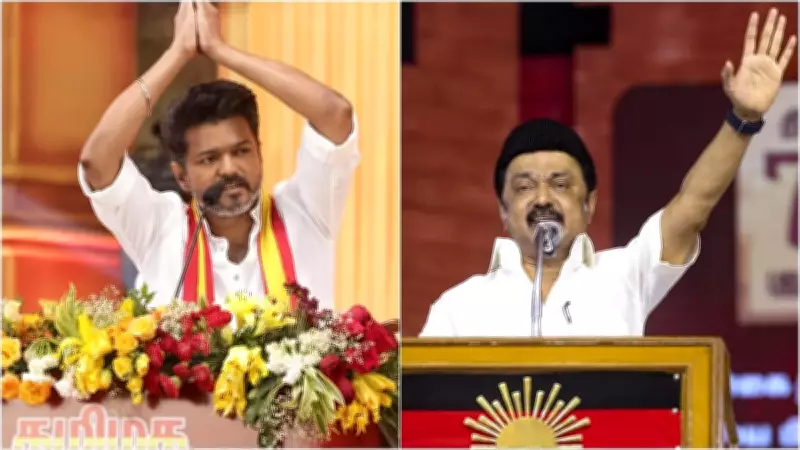
In a significant political statement, Tamil actor and leader of the Tamilaga Vettri Kazhagam (TVK) party, Vijay, has claimed that the ruling Dravida Munnetra Kazhagam (DMK) government's recent announcement of Rs 2000 monthly financial assistance for women was directly influenced by the growing support base among women for his own political movement. This assertion sheds light on the intensifying political competition and strategic maneuvers in Tamil Nadu ahead of upcoming elections.
Political Context and the Announcement
The DMK government, led by Chief Minister M.K. Stalin, recently unveiled a scheme promising Rs 2000 per month to women heads of families, a move widely seen as a populist measure aimed at bolstering support among female voters. Vijay, in his remarks, suggested that this decision was not merely a welfare initiative but a reactive strategy by the DMK to counter the increasing appeal of his party among women across the state.
Vijay emphasized that the "fear of the whistle"—a reference to the symbolic support and vocal backing from women—compelled the ruling party to make this announcement. He pointed out that women have been actively participating in his party's events and rallies, signaling a shift in political allegiance that has put pressure on the DMK to respond with tangible benefits.

Analysis of Women's Political Mobilization
This development underscores the evolving role of women in Tamil Nadu's political landscape. Historically, women's issues and representation have been key themes in the state's politics, with parties often introducing schemes to secure their vote bank. Vijay's comments highlight how grassroots mobilization and public support can influence policy announcements, even from established parties like the DMK.
The announcement of Rs 2000 aid is seen as a strategic move to address economic concerns and social welfare, but Vijay's interpretation adds a layer of political rivalry to it. He argued that the DMK's move is an acknowledgment of the effectiveness of his party's outreach and the growing discontent among women with existing governance.
Implications for Tamil Nadu Politics
The rivalry between Vijay's TVK and the DMK is intensifying, with both sides vying for the support of key demographics, including women. This incident reflects broader trends in Indian politics where new entrants challenge incumbents by leveraging public sentiment and specific voter groups.
- Women's empowerment and financial independence have become central issues in the political discourse.
- The DMK's aid announcement may be aimed at preempting potential losses in women's votes to emerging parties like TVK.
- Vijay's assertion could galvanize his supporters and attract more women to his cause, setting the stage for a competitive electoral battle.
As Tamil Nadu prepares for future elections, such dynamics are likely to shape campaign strategies and policy decisions, with women's support emerging as a critical factor. The interplay between welfare schemes and political maneuvering highlights the complex nature of democracy in the state.