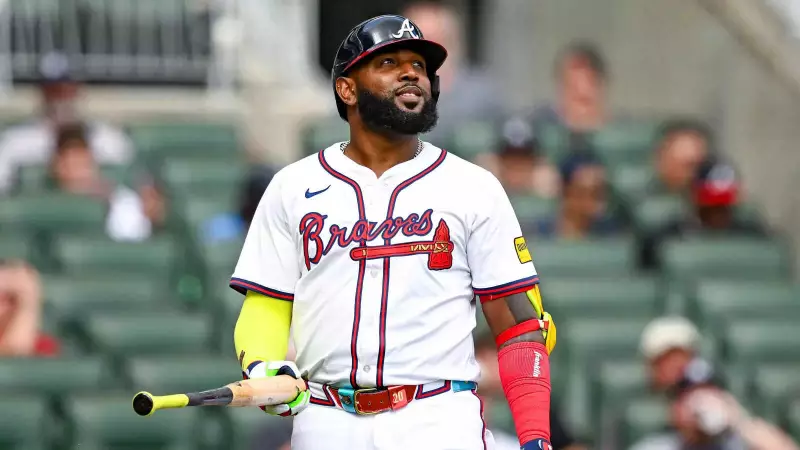
Atlanta Braves Seriously Considering Corey Seager Trade Move
The Atlanta Braves front office is actively pursuing a potential trade for Texas Rangers shortstop Corey Seager. This development has sparked widespread discussion across Major League Baseball circles. The Braves have identified shortstop as a critical area needing improvement.
No-Trade Clause Creates Major Obstacle
Multiple reports from the Winter Meetings confirm Atlanta's genuine interest in Seager. The Braves have been searching for stability at shortstop since Dansby Swanson departed. However, a significant barrier exists. Atlanta appears on Seager's no-trade list. This means any potential deal would require his personal approval.
This contractual detail has kept discussions at a preliminary stage. Rangers general manager Chris Young has expressed willingness to adjust the roster. Texas faces payroll considerations following the Marcus Semien agreement. Despite this openness, no serious negotiations have developed around Seager. The shortstop is owed approximately $186 million over the next six seasons.

National baseball reporters, including Jeff Passan, describe Atlanta's interest as authentic but exploratory. The Braves recognize Seager's no-trade clause presents a substantial hurdle.
Why Seager Fits Atlanta's Needs Perfectly
Atlanta's interest makes complete baseball sense. Shortstop production represented a clear weakness for the Braves in 2025. The position generated just 1.1 fWAR with minimal power and limited on-base impact. Adding Seager would transform this situation immediately.
He would provide another reliable bat alongside Ronald Acuña Jr. and Matt Olson. Compared to recent options like Mauricio Dubón, Seager offers consistent power and proven postseason experience. His presence would also give Atlanta valuable infield flexibility. The Braves could keep him at shortstop or adjust defensive alignments to optimize health and fielding.
Potential Trade Framework Emerging
Any trade proposal remains speculative at this point. However, league conversations suggest Texas would prioritize depth over elite prospects. One discussed framework involves Atlanta sending controllable pitching and secondary pieces. The Rangers might provide financial assistance to facilitate the deal.
Names mentioned in these discussions include pitchers Hurston Waldrep and Dylan Dodd. Additional depth players would help balance value. There is talk of Texas retaining $10–15 million annually to reduce Seager's $31 million average salary. This concept aligns with Atlanta's win-now philosophy. Everything depends on whether Seager would agree to waive his no-trade clause.
Texas Rangers Face Difficult Decision
For the Texas Rangers, trading Seager would signal a strategic shift. After finishing 81–81 and confronting payroll pressure, shedding long-term salary holds obvious appeal. Rebuilding pitching depth represents another potential benefit. However, moving a franchise player with postseason success would be challenging.
Seager is 31 years old, and durability concerns have emerged following recent injuries. Texas might decide moving him early is preferable to risking decline. Replacing a hitter with his credentials would prove extremely difficult for any organization.
Statistical Gap Highlights Need
The numbers clearly explain why this rumor persists. In 2025, Corey Seager posted a .271 average with 21 home runs and 50 RBIs. His .860 OPS and 6.1 WAR demonstrated elite production. Meanwhile, Atlanta's shortstops combined for approximately a .220 average with just 8 home runs and 35 RBIs. Their .650 OPS and 1.1 WAR revealed a substantial performance gap.
Advanced metrics widen this disparity further. Seager's .365 wOBA and strong barrel rate significantly exceed Atlanta's recent infield output. Projections suggest his power would translate effectively to Truist Park's dimensions.
Pros and Cons for Both Organizations
Atlanta Braves Advantages:
- Adds an elite hitter at a major position of weakness
- Left-handed power fits well within their division
- Brings deep postseason experience to the roster
Atlanta Braves Risks:

- Recent injury history raises durability questions
- Heavy long-term salary commitment required
- No-trade clause could terminate discussions entirely
Texas Rangers Advantages:
- Adds valuable pitching depth and prospect capital
- Reduces long-term payroll obligations significantly
- Allows for strategic roster reset and flexibility
Texas Rangers Risks:
- Loses a franchise cornerstone player
- No clear internal replacement for his offensive production
- Potential fan backlash from trading a popular star
Who Would Benefit Most From This Trade?
If Seager approved a move to Atlanta, the Braves would secure one of the biggest possible offseason additions. This would immediately alter the National League competitive landscape. Texas would gain future flexibility but sacrifice star power and organizational identity.
Currently, this scenario represents a high-level possibility rather than an imminent deal. However, as long as Atlanta continues searching for shortstop solutions and Texas remains open to roster reshaping, Corey Seager's name will stay prominent in offseason conversations.