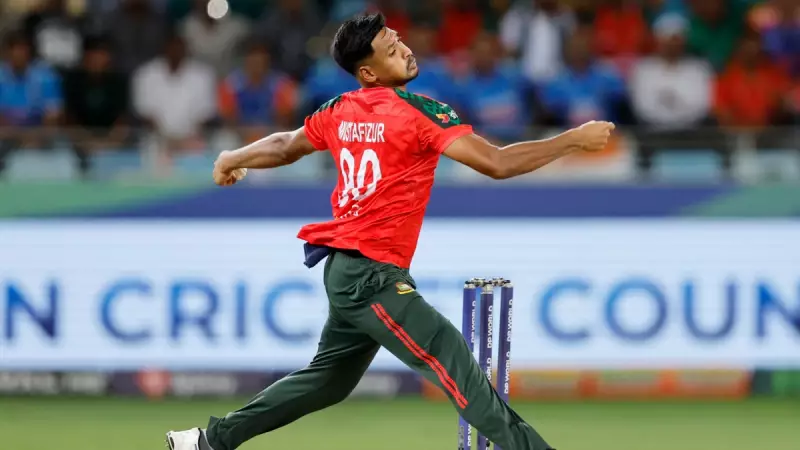
The Bangladesh Cricket Board (BCB) has received a significant directive that could alter the landscape of the upcoming T20 World Cup 2026. The board has been instructed to relocate its scheduled matches away from India, a decision that comes in the wake of a controversial incident involving star pacer Mustafizur Rahman and his premature exit from the Indian Premier League (IPL) 2024 season.
The Trigger: Mustafizur Rahman's IPL Contract Termination
The chain of events began when Mustafizur Rahman, Bangladesh's premier left-arm fast bowler, had his IPL 2024 contract with the Chennai Super Kings (CSK) terminated abruptly. The official reason cited was a recurring injury concern. However, sources close to the development suggest a deeper rift, with the BCB's management of the player's workload and international commitments being a point of contention with the IPL franchise.
This incident, which occurred during the ongoing IPL season, was perceived by the BCB as a sign of disrespect and a lack of cooperation from the Indian cricket board (BCCI) in managing a bilateral asset. The feeling within the BCB corridors was that the treatment of their key player was unfair and set a problematic precedent for future engagements.

The Fallout: Directive to Shift World Cup Matches
In a decisive move, the BCB's top brass has now been instructed to initiate the process of shifting Bangladesh's allocated matches for the T20 World Cup 2026 away from Indian venues. The 2026 edition of the tournament is scheduled to be jointly hosted by India and Sri Lanka. As per the initial plan, several group-stage matches involving Bangladesh were to be played in India.
The directive explicitly states that the BCB should formally request the International Cricket Council (ICC) to reassign Bangladesh's matches to Sri Lankan venues. This is not a mere suggestion but a firm instruction reflecting the board's hardened stance. The core argument is centered on ensuring a "neutral and respectful environment" for the Bangladeshi team, free from the perceived political and administrative tensions that surfaced during the Mustafizur episode.
Broader Implications for Cricket Relations
This development threatens to strain the cricketing relations between the two neighboring boards. The BCCI and BCB have had a long, albeit sometimes complicated, history of collaboration. This move could have several immediate consequences:
- Logistical and Financial Impact: Shifting matches at this stage involves complex logistical rearrangements and potential financial implications for broadcasters and organizers.
- Diplomatic Strain: It introduces an element of diplomatic strain into what should be a purely sporting event, with the ICC likely to play mediator.
- Precedent for Future Tours: It raises questions about the smooth conduct of future bilateral series between India and Bangladesh, including planned tours.
- Player Morale and Focus: For players like Mustafizur Rahman, who are central to the dispute, it adds an unnecessary layer of political pressure off the field.
The BCB's instruction underscores a growing assertiveness among cricket boards in protecting their players' interests and dignity on the global franchise circuit. The T20 World Cup 2026 is still two years away, providing a window for negotiations and potential de-escalation. However, the current stance from Bangladesh signals a willingness to take firm action based on principle, even if it complicates a major ICC event.
All eyes will now be on the ICC's response to the anticipated formal request and whether the BCCI will engage in back-channel discussions to resolve the underlying issues. The outcome will set a significant precedent for how player-board-franchise conflicts are managed in the increasingly interconnected and commercialized world of international cricket.