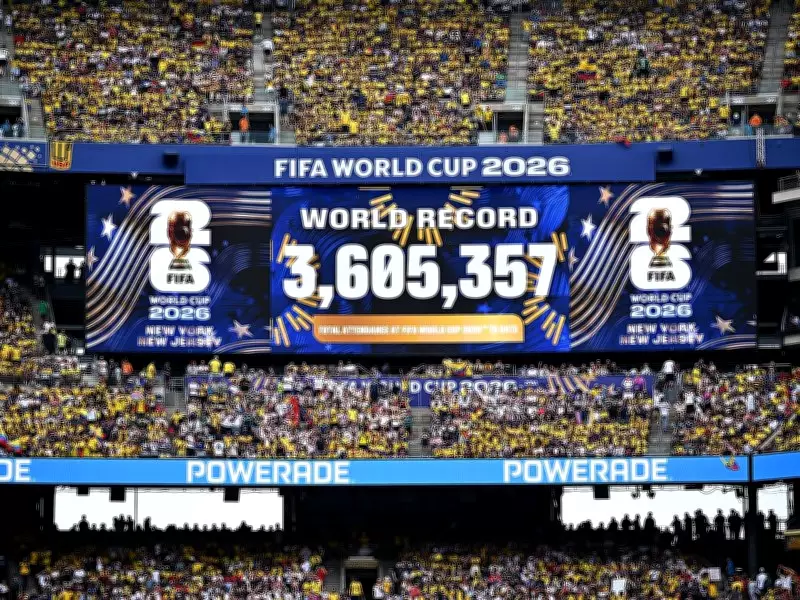
FIFA World Cup 2026 has officially become the highest-attended edition in the tournament's history, surpassing the previous record set in 1994. The milestone was reached on June 25, 2026, during the second half of the Group E match between Germany and Ecuador at the New York/New Jersey Stadium in New Jersey, USA. According to the FIFA website, the aggregate attendance crossed 3,605,357 spectators with 56 matches still remaining in the tournament.
Record-breaking attendance details
The previous record of 3,587,538 spectators was set during the 1994 FIFA World Cup, also hosted by the United States. The new record was confirmed when stadium screens displayed the updated attendance figure of 3,605,357. FIFA stated on their website: "Fifty-six matches in, FIFA World Cup 2026 has already broken the aggregate attendance record for a FIFA World Cup at any stage - the previous record was 3,587,538 at USA 1994."
Germany vs Ecuador match recap
The record-breaking match also featured a major upset. Ecuador defeated four-time champions Germany 2-1, securing their qualification for the Round of 32. Germany took an early lead in the second minute through Leroy Sane, who finished clinically from a Florian Wirtz assist. The goal stood after a VAR check despite Ecuador's protests over a possible foul in the build-up involving Aleksandar Pavlovic and Pedro Vite. The strike at 1:49 minutes was the second-fastest goal in Germany's World Cup history.

Ecuador equalized in the ninth minute when Nilson Angulo struck a powerful long-range effort past Manuel Neuer. The match remained 1-1 at halftime, with Ecuador growing in confidence through aggressive pressing and quick transitions. The decisive moment came in the 77th minute from a corner: Kevin Rodriguez won an aerial duel, and Gonzalo Plata reacted quickest to poke home from close range. Despite seven minutes of added time and sustained German pressure, Ecuador defended resolutely to secure the win.
Historical significance for Ecuador
This victory marked only the second time Ecuador has progressed from a World Cup group stage, matching their achievement in 2006. The team's resilient performance highlighted their tactical discipline and ability to compete against top-tier opponents.