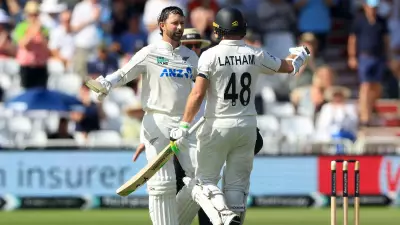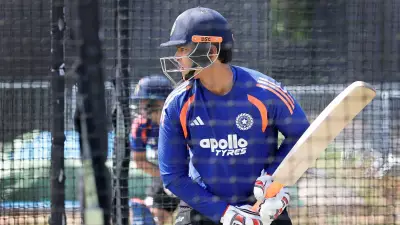
New Zealand captain Mitchell Santner has emphasized his team's readiness to tackle the unique challenges posed by the upcoming T20 World Cup, particularly focusing on adapting to different playing surfaces and the demands of day games. Speaking after the conclusion of their T20I series against India, Santner highlighted the Black Caps' reliance on past sub-continent experience and inherent adaptability skills to navigate the tournament's varied conditions successfully.
Drawing from Sub-Continent Experience
The Kiwis recently completed a preparatory tour of India, playing eight white-ball matches, including three ODIs and five T20Is, as part of their build-up to the ICC showpiece event beginning on February 7. Santner pointed out that several New Zealand players have valuable experience from participating in the Indian Premier League, particularly in Chennai, which he described as having "a pretty good wicket." This familiarity with local conditions is expected to provide a significant advantage as the team prepares for the World Cup challenges.
Navigating Different Venues and Start Times
New Zealand finds itself placed in Group B alongside Afghanistan, UAE, South Africa, and Canada, with their group stage matches scheduled across two venues. The team will play three matches in Chennai and one in Ahmedabad, facing varied start times that include 11 am, 3 pm, and 7 pm fixtures. Santner acknowledged that the day games, in particular, will require players to adjust their routines significantly.

"The day game is going to be slightly different," Santner explained. "Guys are going to have to reset their clocks, try to get up a little bit earlier. But again, it's a new challenge for us. We go to Ahmedabad for one game on red soil, then we go to Chennai on black soil, so it's going to be slightly different."
Adaptability as a Team Strength
The New Zealand captain emphasized that adaptability forms a core part of his team's identity and strategy. "I guess we pride ourselves on trying to adapt as quickly as we can on surfaces," Santner stated. "So, I think, going throughout the World Cup, we have to adapt to different surfaces. We've got three games in Chennai, so, it might play a lot different to what here, or it could play the same. And if it does, we kind of know how to operate."
Value of the India Series Preparation
Despite losing the T20I series against India 1-4, Santner viewed the experience as invaluable preparation for the World Cup. "I think we're obviously tested a lot throughout the series," he reflected. "We knew that was going to be the case. We know how good India are, especially their record at home. But for us it was a great series, great prep."
The captain acknowledged the disappointing results but focused on the learning opportunities, particularly for the bowling unit. "I guess the results, a little bit disappointing, but as a learning, I think everyone, bowlers especially, got a lot out of the series. So if we are to come up against India, or a really flat wicket in India, where I guess 230, 240 might be a good effort."
Boost from Ferguson's Return
Santner expressed particular satisfaction with the return of express pacer Lockie Ferguson, who made his comeback after several months out of action. In his first match back, Ferguson claimed two crucial wickets, dismissing Abhishek Sharma and Sanju Samson while conceding 41 runs.
"Lockie has shown his class whenever he plays for New Zealand," Santner praised. "Obviously, he's in the franchise stuff as well, but I think for us, making sure he was back ready and fit, ready to go. We didn't want to push it too early. I guess for his first bowl out, it looked pretty good and was bowling pretty quick. So for us, it's a massive boost."
As New Zealand prepares for their T20 World Cup campaign, Santner's confidence in his team's adaptability and preparation suggests the Black Caps are approaching the tournament with a strategic mindset focused on overcoming environmental challenges and leveraging their collective experience in sub-continent conditions.