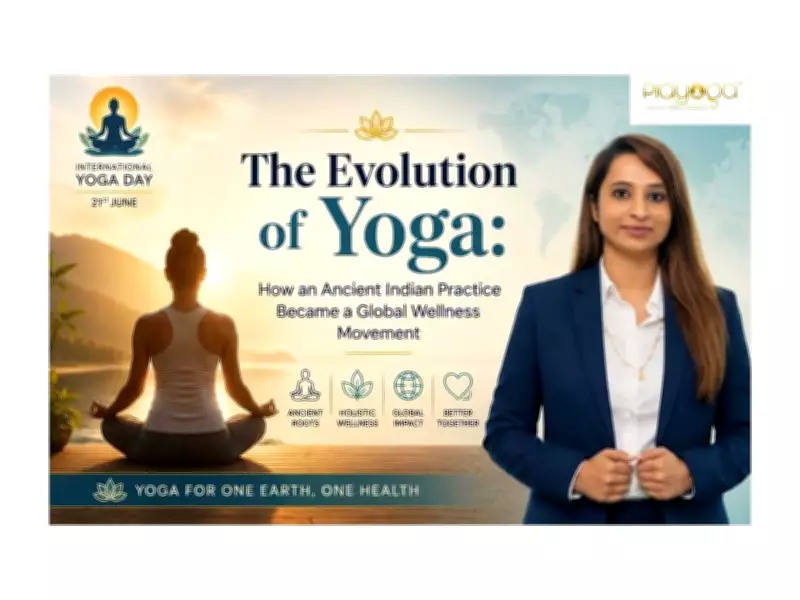
Every year, millions of people worldwide unroll a yoga mat in studios, parks, living rooms, and virtual spaces. Some seek greater flexibility and physical strength. Others pursue weight management, better posture, or relief from back pain. Many turn to yoga for deeper reasons: to manage stress, anxiety, burnout, insomnia, or chronic health conditions. Yet few stop to reflect on a profound question: How did an ancient Indian spiritual discipline, born thousands of years ago in the foothills of the Himalayas and along the banks of the Ganges, transform into one of the planet's most influential global wellness movements?
The answer lies in yoga's remarkable capacity to evolve across centuries while remaining anchored in timeless principles of self-awareness, balance, and inner harmony. Far from being a passing trend, yoga has demonstrated an extraordinary adaptability that allows it to speak to each generation's unique challenges.
Yoga Was Never Meant to Be Just Physical
Popular culture often portrays yoga primarily as a form of exercise involving complex postures and flowing sequences. However, historical and philosophical evidence reveals a far richer origin. The earliest mentions of yoga appear in the Vedic texts more than 3,000 years ago. Ancient sages (rishis) were not primarily concerned with physical fitness but with fundamental existential questions that still resonate today: Who are we? What causes human suffering? How can we attain lasting peace, clarity, and fulfillment?

Yoga emerged as a comprehensive practical system to address these questions. Early practices emphasized meditation (dhyana), breath control (pranayama), ethical living (yamas and niyamas), and disciplined self-observation. Physical postures (asanas) played a supporting role at best. The ultimate aim was not a toned body but mastery over the fluctuations of the mind and the realization of one's true nature.
Patanjali and the Blueprint of Yoga
A pivotal milestone came around the second century BCE when the sage Patanjali systematized yogic knowledge in the Yoga Sutras, a concise yet profound text comprising 196 aphorisms. Patanjali defined yoga succinctly: "Yogas chitta vritti nirodhah" — yoga is the cessation of the fluctuations of the mind.
His framework, known as the Eight Limbs of Yoga (Ashtanga), provides a holistic roadmap for personal development. It begins with ethical principles (yama), personal observances (niyama), physical postures (asana), breath regulation (pranayama), sensory withdrawal (pratyahara), concentration (dharana), meditation (dhyana), and culminates in samadhi — a state of profound absorption and unity.
Notably, the physical practice that dominates modern classes constitutes only one small limb of this system. Patanjali's vision was integrative, addressing body, mind, and spirit as interconnected aspects of human experience.
The Rise of Hatha Yoga
Between the 10th and 15th centuries CE, the Hatha Yoga tradition brought greater focus to the physical body. Texts like the Hatha Yoga Pradipika and Gheranda Samhita detailed structured postures, advanced breathwork, cleansing practices (shatkarmas), and energy manipulation techniques. Practitioners began viewing the body as a temple and vehicle for spiritual growth.
This period marked an important shift: yoga expanded to include deliberate cultivation of physical vitality, strength, and resilience alongside mental stability. By caring for the body, one could more effectively pursue higher states of consciousness. This balanced approach laid the groundwork for yoga's later global appeal.
Yoga Meets the Modern World
The late 19th and 20th centuries witnessed yoga's most dramatic transformation. As India grappled with colonial rule and modernization, visionary teachers carried yogic wisdom beyond its borders. Swami Vivekananda's landmark speech at the 1893 Parliament of the World's Religions in Chicago introduced Vedantic and yogic philosophy to Western audiences, emphasizing its universal and scientific spirit.

In the following decades, teachers like T. Krishnamacharya, B.K.S. Iyengar, Pattabhi Jois (founder of Ashtanga Vinyasa), and Indra Devi played instrumental roles in democratizing the practice. Krishnamacharya's students developed distinct styles — Iyengar Yoga with its emphasis on alignment and props, and Ashtanga's dynamic, athletic flow. Yoga gradually moved from ashrams and gurukuls into schools, universities, community centers, and eventually mainstream fitness culture across Europe, North America, and beyond.
The Fitness Era and Its Paradox
By the 1980s and 1990s, yoga experienced another evolution. In many Western contexts, it became closely associated with physical fitness, flexibility, strength training, and aesthetic ideals. Yoga studios proliferated in cities worldwide. New hybrid styles emerged — Power Yoga, Vinyasa Flow, Hot Yoga, Aerial Yoga, and more. Social media platforms amplified this trend, showcasing impressive contortions and inspiring millions to begin their practice.
This physical boom undeniably brought enormous benefits. It introduced yoga to people who might never have encountered it otherwise. Millions report improved mobility, better posture, weight management, cardiovascular health, and overall fitness. However, this emphasis sometimes overshadowed yoga's deeper philosophical and meditative dimensions, creating a paradox where the practice's surface-level expression gained prominence while its profound inner work receded into the background for many practitioners.
Why Yoga Is Evolving Again
Today, yoga stands at another significant inflection point. Modern life presents unprecedented challenges: digital overload, constant notifications, information anxiety, sedentary lifestyles, sleep disruption, emotional burnout, and widespread mental health concerns. Ironically, these very pressures are driving people back toward yoga's original purpose.
Contemporary practitioners increasingly seek nervous system regulation, emotional resilience, improved focus amid distraction, and tools for mindful living. Yoga offers practical methods to cultivate presence — learning to pause, breathe, and respond rather than react in a fast-paced world.
Scientific research increasingly validates traditional claims. Studies published in journals such as The Journal of Alternative and Complementary Medicine and Frontiers in Psychology demonstrate yoga's efficacy in reducing cortisol levels, alleviating symptoms of anxiety and depression, improving sleep quality, enhancing cognitive function, and supporting management of conditions like hypertension, diabetes, and chronic pain. Neuroimaging studies reveal positive changes in brain regions associated with emotional regulation and attention.
The Future of Yoga
The future of yoga will blend ancient wisdom with modern innovation. Technology is expanding access through online platforms, virtual reality classes, wearable devices tracking breath and heart rate variability, and AI-personalized practice recommendations. Hybrid models combining in-person community with digital convenience are becoming the norm.
Yet the core essence remains unchanged: yoga's tools may adapt, its delivery may modernize, but its fundamental purpose endures — helping individuals cultivate awareness, balance, and authentic connection with themselves and the world around them. Yoga has survived millennia not by resisting change, but by meeting each era's needs while preserving its transformative heart.
Experiencing Yoga Beyond the Mat
As yoga continues evolving, the greatest invitation is to embrace it holistically — not merely as physical exercise, but as a complete pathway to well-being. Whether you are a complete beginner or a seasoned practitioner seeking deeper connection, the journey starts with consistent, sincere effort.
At Playoga, we are dedicated to bridging ancient yogic wisdom with contemporary lifestyles. Our guided online sessions integrate movement, breathwork, mindfulness, and practical philosophy tailored for modern challenges. We emphasize sustainable practice that nourishes body, mind, and spirit.
If this exploration resonates with you, we warmly invite you to experience yoga beyond the mat. Discover how this ancient practice can support greater clarity, resilience, and joy in today's demanding world.
(ADVERTORIAL DISCLAIMER: The above press release has been provided by PNN. ANI will not be responsible in any way for the content of the same.)