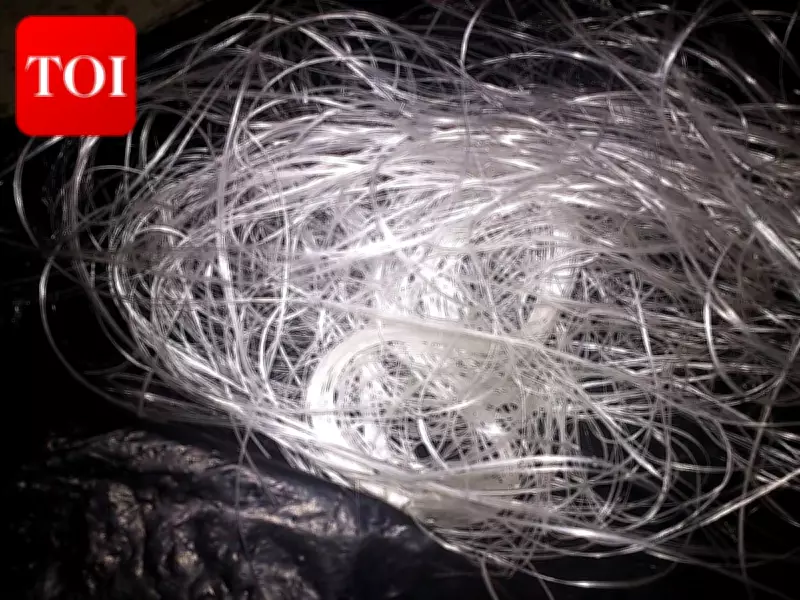
The story of fiberglass began with an accident, not a deliberate invention plan. In 1932, an engineer in an Owens-Illinois laboratory witnessed a bizarre event that opened the door to a product now ubiquitous in modern life. While working, molten glass unexpectedly formed hair-thin filaments. This observation revealed that glass could be drawn into flexible fibers. Instead of cooling into a rigid block or sheet, it transformed into fine strands that could be gathered, twisted, and compressed into various shapes. The concept was straightforward, yet the results were astonishing. If glass could be fiberized, it could be used in ways traditional glass could not.
From Lab Error to Controlled Process
The peculiar behavior of glass became useful after the industry learned to manage the phenomenon. According to the International Agency for Research on Cancer (IARC), glass-fiber production involves melting silica-based materials and transforming them into extremely fine filaments using various fiberization methods. The complete research on this manufacturing process is detailed in IARC's Monographs on Chemical Agents. This technical background explains why the early-1930s observation mattered. The lab accident suggested that molten glass could form fibers, but producing them reliably required further development. Engineers had to learn how to reproduce the effect consistently, controlling fiber diameter, strength, and output. This meant determining suitable temperatures, pulling strategies, and shapes that could be gathered into mats or cloth. Physically, the process was identical, but the results were entirely new. Fiberglass became possible because molten glass could be shaped into hair-thin fibers rather than simply cooling into a rigid mass.
Engineers Who Made It Work
The next stage involved engineers who developed the technology. An historical overview by Purdue University credits Games Slayter with developing coarser fibers that made commercially viable fiberglass possible. A detailed account of Slayter's work is accessible via Purdue University. This highlights the amount of invention required after the 1932 incident. The accident pointed to an idea, but it was not enough to provide industry with an enduring material. Fibers needed to be stronger, with better handling and manufacturing. An invention becomes a reality only when someone discovers how to implement it. This corrects a common error in the narrative: many remember the dramatic scene but ignore the slower technology that followed. However, modern material society depends on that slower process. Finer fibers, better control, and improved factory procedures made fiberglass simpler to manufacture and utilize. It was more than an experiment; it was an achievement that supported the development of future products in many sectors.

From Patience to Industry
In 1936, Corning Glass and Owens-Illinois created the glass-fiber mat and cloth known as Fiberglas. Fiberglas did not remain a lab experiment; it entered a commercial phase with forms like cloths and mats that could be used and sold. Transitioning from fiber to product marked when fiberglass truly became part of everyday business. Fiberglass-reinforced plastic boats followed soon after, signaling that the material had crossed from novelty to utility. Boats required fiberglass's strength, lightweight, and water resistance, and fiberglass delivered. The story of fiberglass is best described as a multi-faceted narrative, not an isolated discovery. A laboratory accident in 1932 revealed the fiberizing properties of molten glass. Engineers refined the procedure, improved manufacturing, and developed the first commercial designs. Every step relied on the preceding one. The glass used in boats, structures, and electronic items resulted from that history. Traditional glass is useful but hard and fragile when cut into thin segments. The fiber shape gave it a new physical form: it could be woven, layered, or combined with other substances. Major materials are rarely created all at once; they emerge when accident or observation meets persistence.