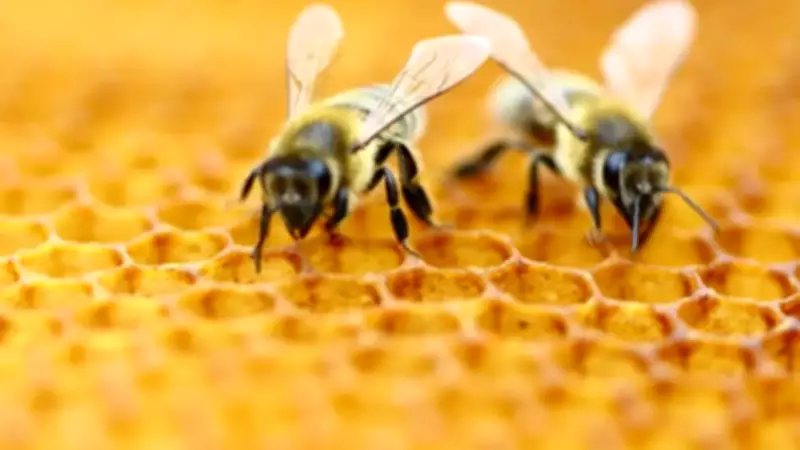
A new study reveals that honeybees are capable of understanding numbers and even the concept of zero, challenging long-held assumptions about animal intelligence. Published in the journal Proceedings of the Royal Society B: Biological Sciences, the research suggests that bees use numerical abilities to navigate their environment, not just random flower visits.
Bees and Numbers: Beyond Pattern Recognition
Scientists have debated whether bees truly count or merely respond to visual patterns. The latest study, led by neuroscientist Mirko Zanon from the University of Trento, Italy, examined the question from the bees' perspective. 'When we look at it from the bees' perspective, it's clear they're sensitive to numbers,' Zanon says.
Bees have tiny brains, smaller than a sesame seed, yet they outperform expectations. A 2018 study in Science found that bees can distinguish between more and less, bigger and smaller, and even grasp zero—a concept most human children learn only in preschool. In training, bees correctly matched symbols to numbers about 75–80% of the time, and in tests, they achieved 60–65% accuracy, well above random guessing.

Addressing Criticisms
A 2020 critique suggested bees might rely on pattern matching rather than counting. Bee vision is limited, so they may not see fine details. Zoologist Scarlett Howard from Monash University in Australia notes, 'We have to see things from the animal's viewpoint when studying their intelligence, or we'll end up underestimating or overestimating them.'
The research team re-examined their data using a mathematical model based on honeybee visual acuity. They found that in previous tests, images with more shapes also had more visual complexity, like edges and details. However, when adjusted for bee vision, this correlation disappeared. 'More objects don't always mean more noticeable details to a bee,' Howard explains.
The new analysis shows that bees cannot simply choose the busier-looking card; the visual cues vanish when filtered through bee eyesight. This leaves numbers as the genuine challenge. 'It can be hard for us to picture what life looks like through a bee's eyes, but meeting them where they are is the key,' Howard adds.
Implications for Understanding Intelligence
The findings underscore that intelligence is not solely about brain size. Bees, with their miniature brains, demonstrate numerical abilities that many animals—and even some humans—struggle with. This research opens new avenues for understanding how different species process information and adapt to their environments.
The study was conducted by a team of researchers from the University of Trento and Monash University, among others. It contributes to a growing body of evidence that bees are far more cognitively advanced than previously thought, capable of problem-solving and numerical reasoning.