Indian-Origin AI Leader Karandeep Anand on Shaping the Future of Consumer AI
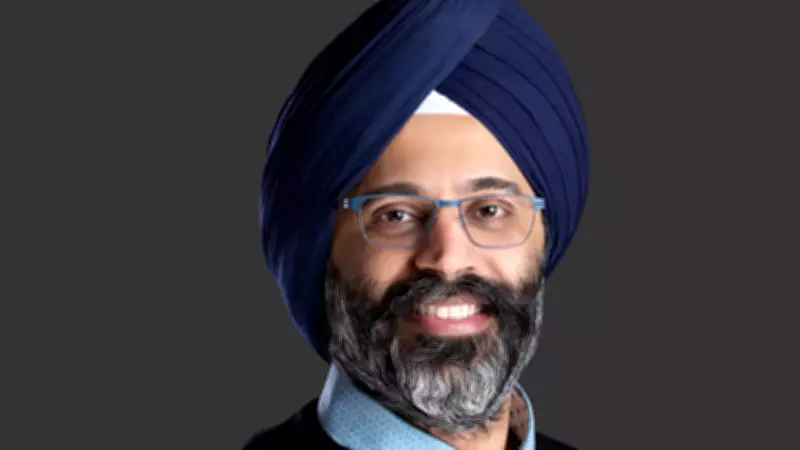
Karandeep Anand, the CEO of Character.AI, has been recognized among TIME magazine's AI Architects 2025, sharing this prestigious distinction with industry giants like OpenAI's Sam Altman and Nvidia's Jensen Huang. As part of a new wave of Indian-origin leaders revolutionizing consumer artificial intelligence, Anand recently visited Delhi for Synapse, a prominent society and technology conference. In an exclusive conversation with Sneha Bhura, he articulated his vision for AI as a technology that could ultimately reduce screen dependence rather than deepen it, marking a significant shift in how we perceive digital interaction.
India's AI Ambitions on the Global Stage
Anand's visit coincided with India concluding its first major AI summit, occurring against the backdrop of intense competition between the United States and China in the AI race. When asked about India's ambitions, Anand expressed optimism tempered with realism. "We are in a fascinating yet frantic era where everyone is rushing to build the biggest and fastest AI models," he noted. "Every nation and corporation views AI as a crucial form of power, and India, as an emerging superpower, cannot afford to be left behind."
He acknowledged that India might be slightly delayed from an infrastructure and resource perspective, requiring substantial capital and technological development. However, the overwhelming response and attendance at the AI summit exceeded expectations, signaling strong excitement and interest. "While logistical challenges emerged due to the scale, this is a necessary starting point that will only improve," Anand emphasized, highlighting the country's potential to become a significant player in the global AI landscape.

Navigating Child Safety and Ethical Responsibilities
Anand assumed leadership at Character.AI during a period of intense scrutiny over child safety and harmful interactions, including incidents involving chatbots named after controversial figures. The company subsequently implemented measures to bar teenagers from open-ended chatbot conversations. Reflecting on this experience, Anand stated, "We inherited a successful product while learning that chatbots can be manipulated to bypass safety guardrails."
Over the past six to seven months, his focus has shifted toward building AI responsibly. Character.AI has introduced age assurance systems to verify users' ages, restricting open-ended chats for those under 18 while allowing supervised story creation. The platform employs sophisticated monitoring to flag controversial characters and banned topics, analyzing not just names but also descriptions and images. "Users sometimes attempt to circumvent restrictions by altering names, so our system continuously evolves to address these challenges," Anand explained.
He pointed out that this responsibility extends beyond Character.AI, with companies like Meta, Roblox, and Discord implementing similar safety measures. "We are proud to have set a benchmark for what AI safety should entail," he added, underscoring the industry-wide commitment to ethical standards.
Regulation, Parental Guidance, and AI's Evolving Role
With governments worldwide, including India, considering age-based restrictions on social media, Anand addressed whether AI companion platforms should face similar regulation. He argued that AI's diverse applications—from math tutoring to role-playing—necessitate case-specific approaches rather than blanket rules. "Responsibility cannot rest solely with regulators; tech companies must collaborate to explain potential misuses and required frameworks," he asserted. He emphasized a tripartite approach involving tech firms, regulators, and parents, with the latter playing a crucial role in overseeing children's AI usage.

As a parent himself, Anand shared insights into managing his six-year-old daughter's interaction with AI. "She uses Character.AI under supervision, along with ChatGPT and Gemini, demonstrating how naturally younger generations engage with this technology," he observed. He cautioned against outright bans, noting that children today are growing up immersed in AI, making accessibility and responsible design paramount. "Unlike traditional computers requiring typing and technical knowledge, AI allows a six-year-old to converse in Hindi, Punjabi, or English seamlessly," he said, highlighting the need for parental vigilance in app selection.
AI Companions: From Novelty to Necessity
Character.AI boasts approximately 20 million monthly active users, with 80% located outside the United States and India representing a significant portion. Anand noted that AI-powered entertainment and role-playing fulfill universal needs, transcending geographical boundaries from Delhi to New York. What begins as novelty often evolves into deeper engagements like gaming and companionship, reflecting AI's expanding societal role.
Addressing concerns about dependency, especially among adults, Anand outlined strict moderation protocols. "We prohibit conversations involving violence, self-harm, or explicit sexual content, while allowing romantic or fantastical scenarios like fighting zombies," he clarified. Without such safeguards, he warned, platforms harnessing AI's power risked scaling irresponsibly.
The Future of AI: Accessibility and Innovation
Anand expressed excitement about advances making AI more accessible, such as voice interfaces and multilingual capabilities enabling interactions in languages like Punjabi. "The ability to create personalized characters, such as a Jaspal Bhatti-like figure for my parents, showcases AI's creative potential," he remarked. He identified better support for Indic languages as an area where India could lead innovation, alongside developments in hyper-realistic videos and AI-powered games.
Most intriguingly, he envisioned AI decoupling users from screens by enabling voice-based interactions through background devices. "For the first time, AI allows engagement without constant phone or computer use, potentially reducing screen time and fostering more natural human-AI relationships," Anand concluded, painting a future where technology enhances rather than dominates daily life.